Machine Learning
Custom machine learning development — predictive models, recommendation engines, anomaly detection, and demand forecasting systems engineered for production and built to improve over time.
Machine learning creates real competitive advantage when it is grounded in solid engineering and anchored to measurable business outcomes. We build predictive models, ranking and recommendation systems, anomaly and fraud detectors, and demand forecasting engines that are rigorously evaluated, reliably deployed, and continuously monitored in production.
Our machine learning consulting and development services span the full ML lifecycle: problem framing, feature engineering, data preprocessing, model selection and training, evaluation with cross-validation and held-out test sets, deployment with REST scoring APIs, and post-launch drift monitoring with automated retraining. We have built ML systems for retail product recommendation, financial fraud detection, supply chain demand forecasting, insurance risk scoring, patient readmission prediction, and customer churn prevention.
We use Python, scikit-learn, XGBoost, LightGBM, PyTorch, and CatBoost alongside cloud ML platforms. Every model we ship includes SHAP value explainability reports, bias and fairness assessments, and business metric dashboards that tie ML outputs directly to revenue, cost, or risk KPIs — so stakeholders understand what the model is doing and why it matters.
-
Business problem framing with quantified success metrics defined upfront
-
Feature engineering pipeline with automated data validation and drift alerts
-
Model training with cross-validation, hyperparameter tuning, and bias assessment
-
A/B testing framework for head-to-head model comparison on live traffic
-
Real-time scoring REST API with sub-100ms p99 latency and horizontal scaling
-
SHAP explainability reports and business KPI dashboard tied to model output
Why RapideKops?
- We optimise for business KPIs — revenue, churn, fraud — not just AUC scores
- Every model ships with a documented feature importance and data dependency report
- Bias and fairness audits are standard on every classification model we deploy
- Online and batch scoring architectures designed for your latency requirements
- SHAP and LIME explainability built in so business stakeholders trust the output
- Your model runs on your infrastructure — no SaaS dependency or ongoing licensing fees
Our Delivery Process
Problem Framing
We translate your business objective into a precise ML problem with defined input features, prediction target, and success criteria measured in business terms.
Feature Engineering
We build and validate features from your raw data, identify the signals that drive the prediction, and eliminate data leakage that would inflate test metrics.
Model Training
We train, tune, and compare candidate models with rigorous cross-validation and held-out test sets — no data snooping, no shortcuts.
Deploy & Improve
Production deployment with statistical drift monitoring and an automated retraining trigger — model quality improves continuously as new data arrives.
Frequently Asked Questions
Recent Work
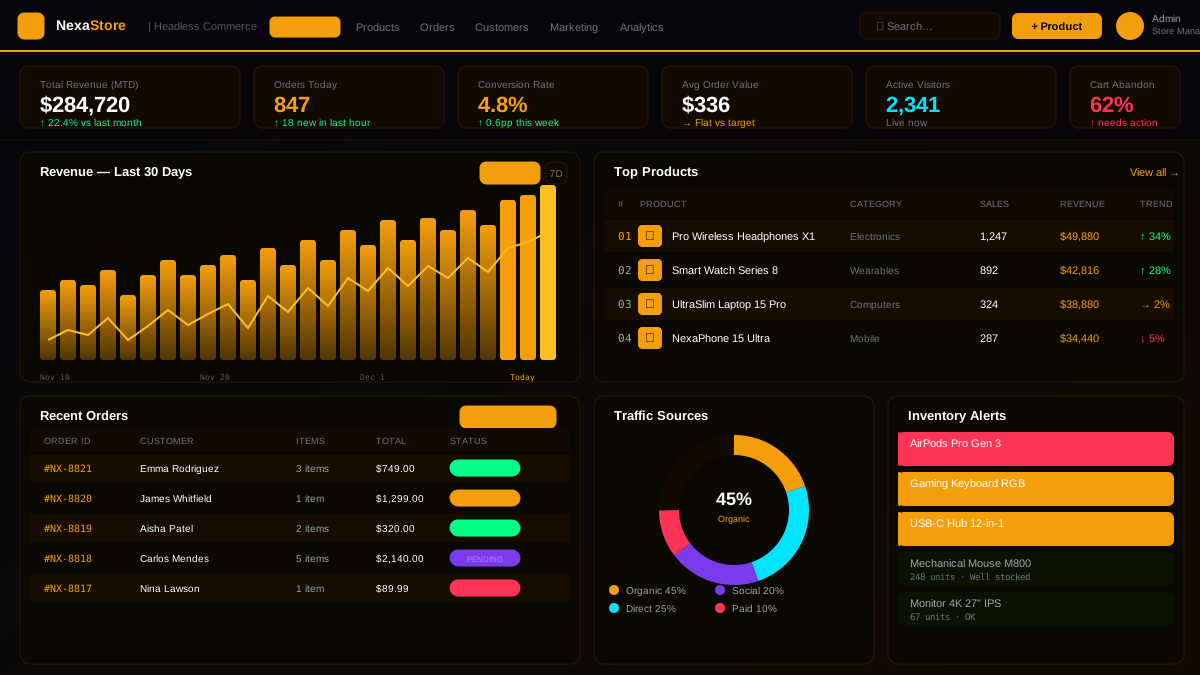
NexaStore — Headless E-Commerce Platform
A high-performance headless e-commerce platform handling 50,000 daily transactions with su...
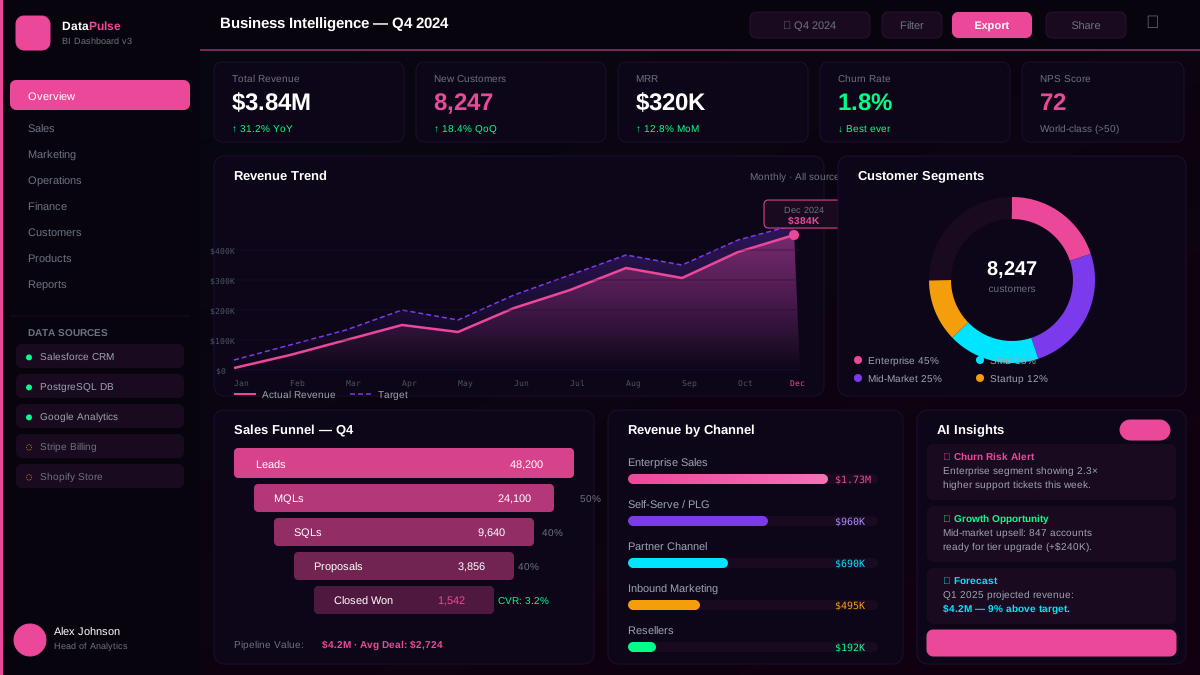
DataPulse — Business Intelligence Dashboard
A natural-language BI dashboard that lets non-technical executives query company data in p...
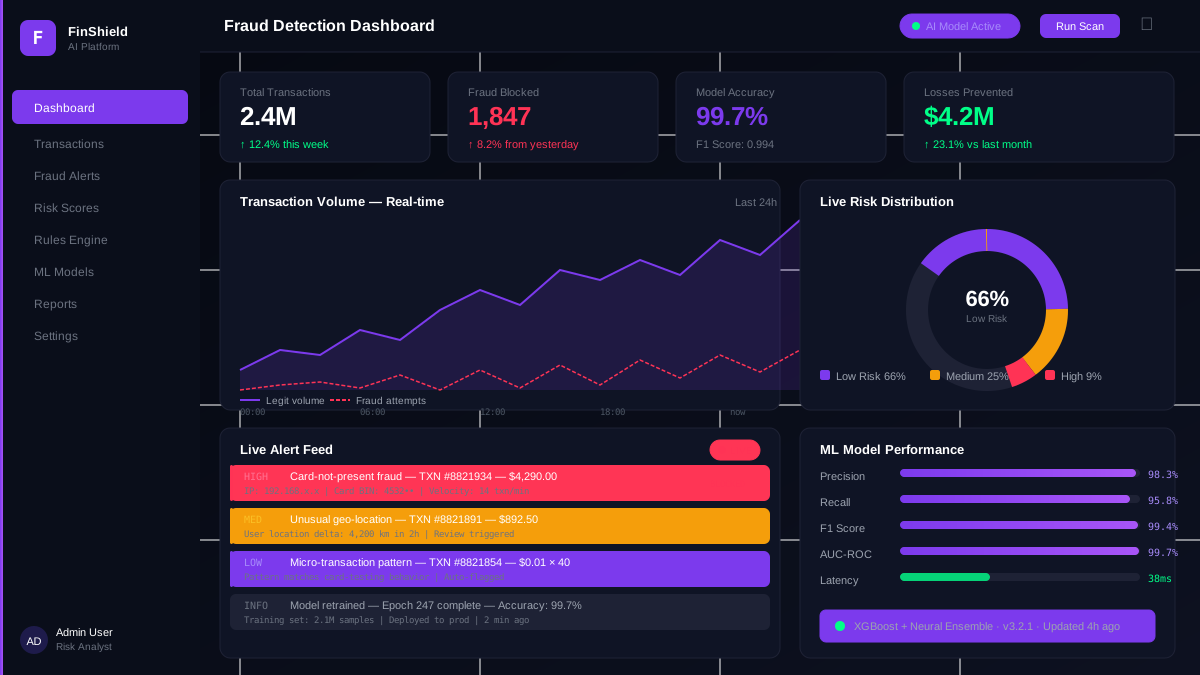
FinShield AI — Real-Time Fraud Detection Platform
A GPT-4 powered fraud intelligence system that cut false positives by 87% and processes 2....
From the Blog
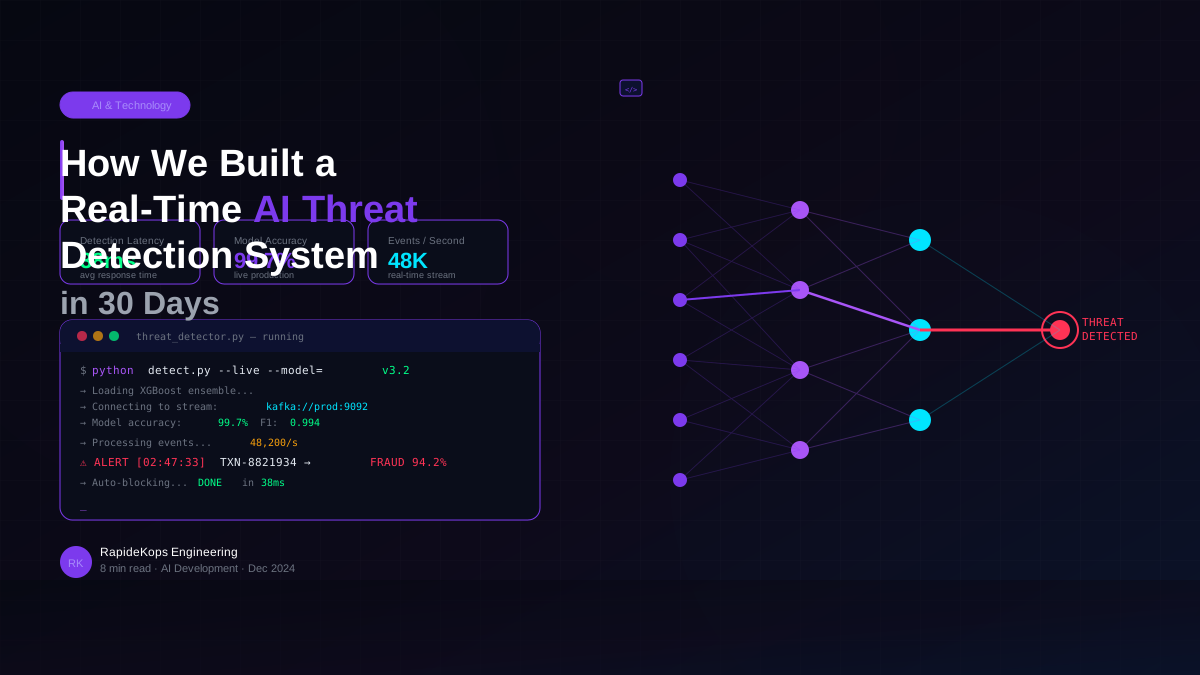
How We Built a Real-Time AI Threat Detection System in 30 Days
A behind-the-scenes look at how our team architected and shipped a GPT-4 powered threat intelligence...
Read Article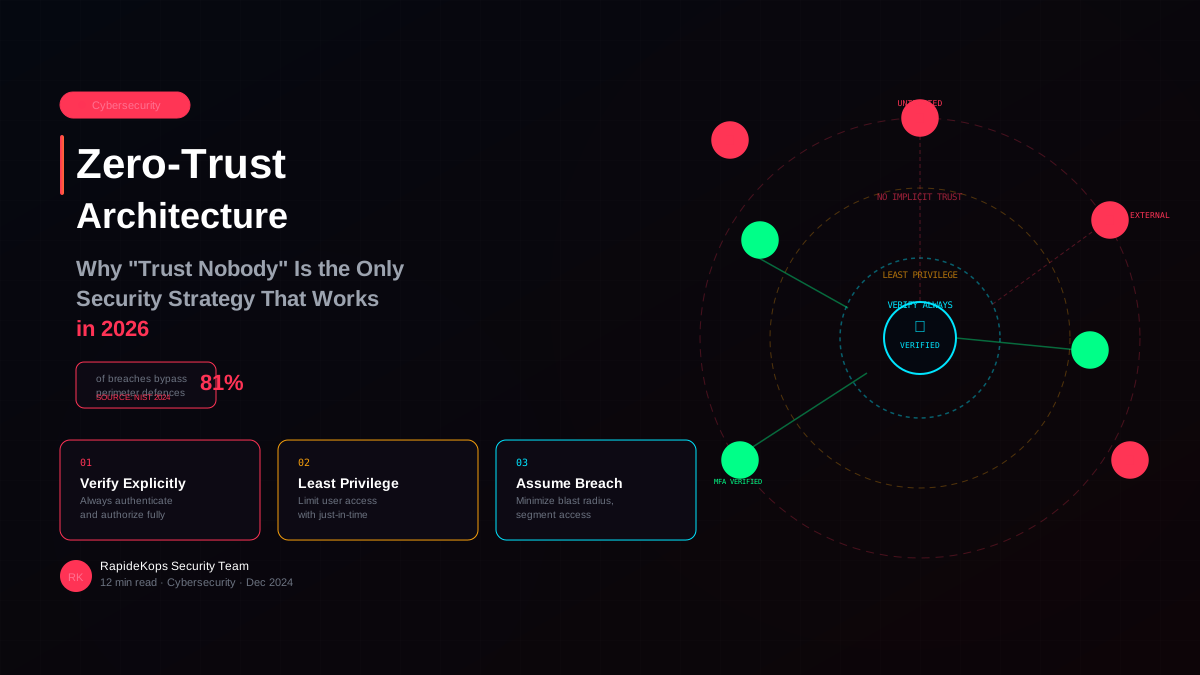
Zero-Trust Architecture: Why Trust Nobody Is the Only Security Strategy That Works in 2026
Perimeter security is dead. Here is a practical guide to implementing zero-trust architecture — the...
Read Article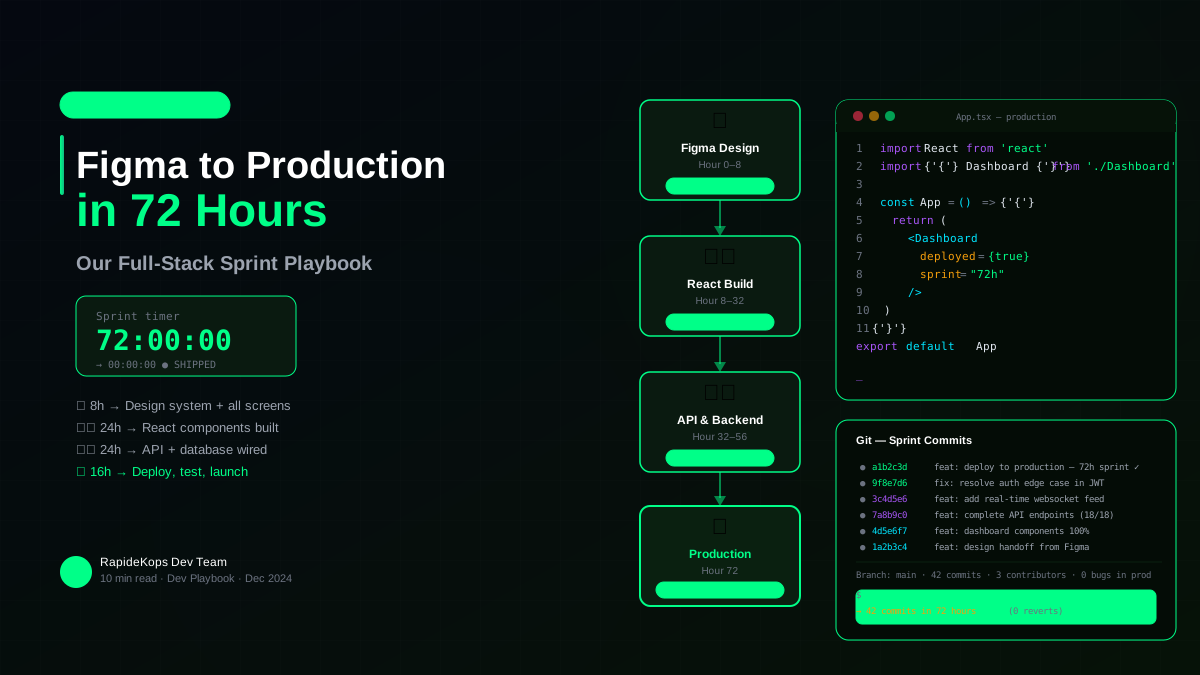
From Figma to Production in 72 Hours: Our Full-Stack Sprint Playbook
Speed without chaos. Here is the exact playbook we use to take a client from approved designs to a l...
Read ArticleReady to Turn Predictions Into Revenue?
Let us build an ML system that makes decisions your business can act on — reliably, explainably, and at production scale.