Gen AI
Generative AI development services — RAG pipelines, LLM-powered applications, AI writing assistants, and agentic automation built for production with enterprise-grade guardrails.
Generative AI development is reshaping how businesses create content, automate workflows, serve customers, and write code. We build production-ready generative AI applications using the latest large language models — GPT-4o, Claude 3.5 Sonnet, Gemini 1.5 Pro, Llama 3, and Mistral — tuned to your specific use case, brand voice, and data sources.
Our generative AI services cover the full spectrum: Retrieval-Augmented Generation (RAG) knowledge bases that answer questions from your internal documents, AI writing assistants trained on your brand guidelines, code generation copilots integrated into developer workflows, structured data extraction from unstructured text, and multi-agent automation pipelines that complete multi-step business processes autonomously. We have delivered GenAI features across legal, real estate, healthcare, HR, e-commerce, and enterprise SaaS.
Every generative AI system we build includes production-grade guardrails: content moderation, hallucination detection, output schema validation, prompt injection protection, PII redaction, and comprehensive audit logging. We design for enterprise compliance requirements from the start — not as an afterthought. The result is a GenAI product your users trust and your legal and compliance teams can sign off on.
-
RAG pipeline with vector database (Pinecone, Weaviate, pgvector) and semantic search
-
Custom system prompts engineered and tested for your brand voice and accuracy
-
Content moderation layer with hallucination detection and fallback responses
-
Multi-turn conversation management with context summarisation
-
Structured output generation with JSON schema enforcement and validation
-
Token cost dashboard with caching, batching, and budget alert controls
Why RapideKops?
- RAG implementation is our core speciality — not a bolt-on capability
- Model-agnostic approach: we select the best LLM for your budget, latency, and task
- Prompts are versioned, A/B tested, and treated like production code
- Guardrails built and red-team tested before any user touches the system
- Data privacy and GDPR review included in every generative AI engagement
- Your prompt templates, fine-tunes, and vector embeddings remain your intellectual property
Our Delivery Process
Use Case Definition
We translate your generative AI goal into concrete output formats, accuracy benchmarks, cost constraints, and compliance requirements before selecting any model.
Prototype & Evaluate
We build a rapid prototype, evaluate outputs against your quality criteria, and iterate on prompts, retrieval strategy, chunking, and temperature until benchmarks are met.
Production Build
We ship a hardened system with streaming responses, error recovery, guardrails, token cost controls, and observability dashboards.
Refine & Scale
Post-launch, we analyse real user interactions, identify failure modes, and continuously improve prompts, retrieval quality, and guardrail coverage.
Frequently Asked Questions
Recent Work
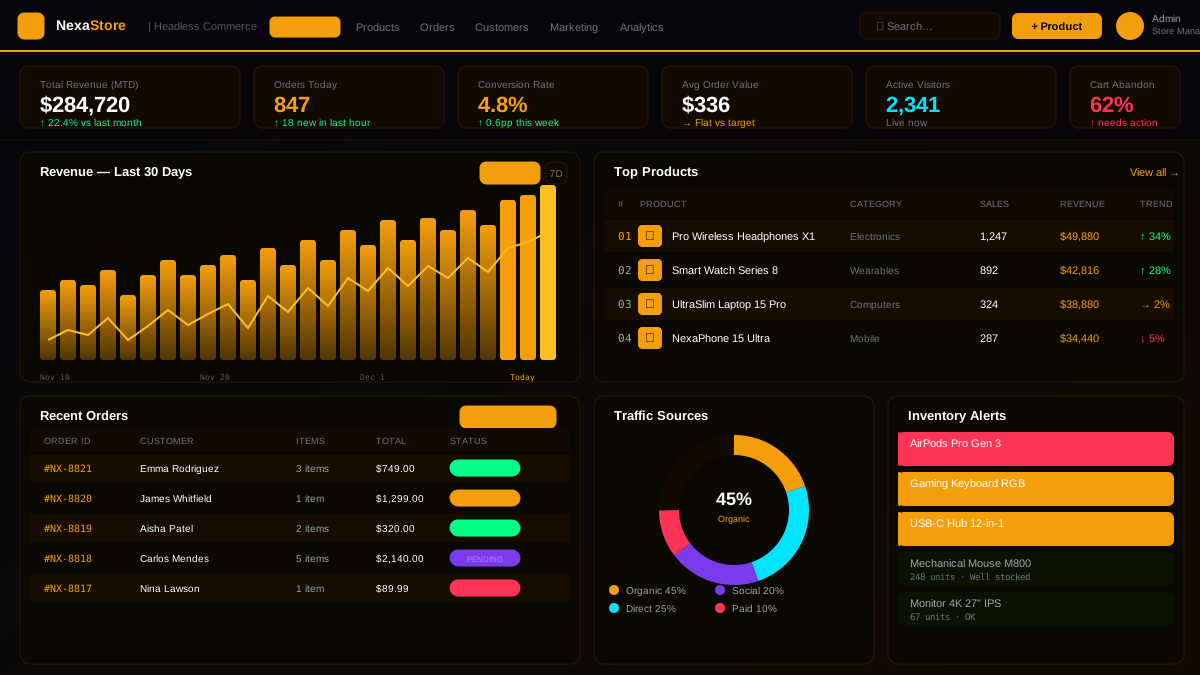
NexaStore — Headless E-Commerce Platform
A high-performance headless e-commerce platform handling 50,000 daily transactions with su...
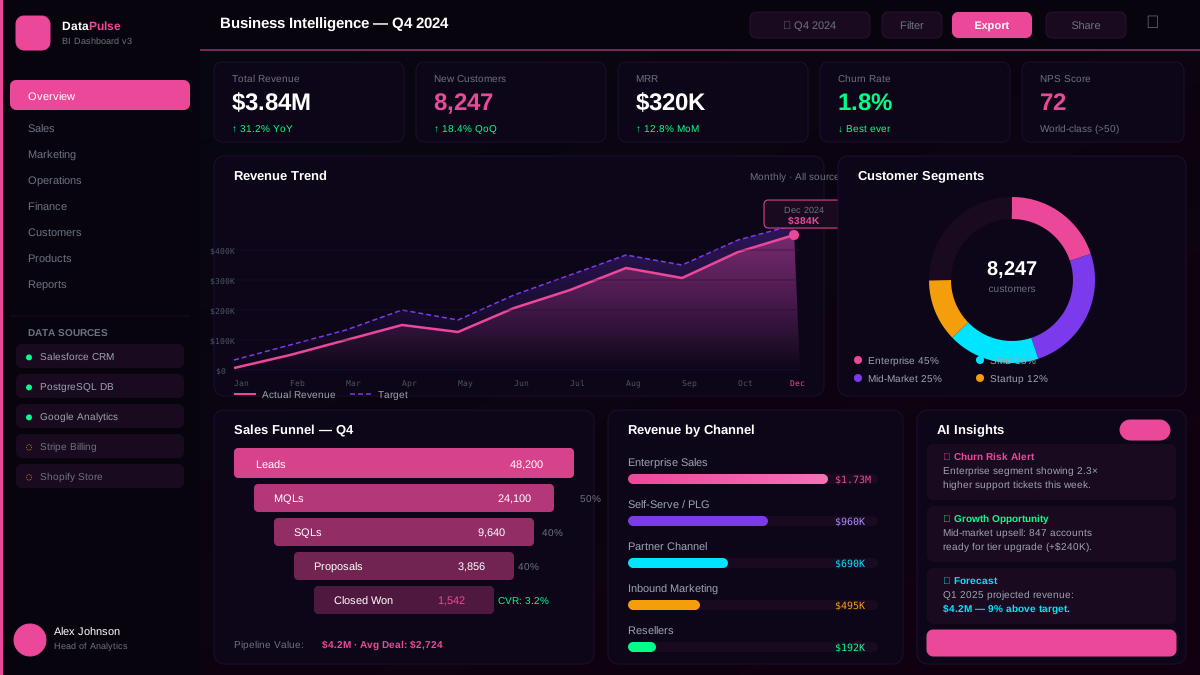
DataPulse — Business Intelligence Dashboard
A natural-language BI dashboard that lets non-technical executives query company data in p...
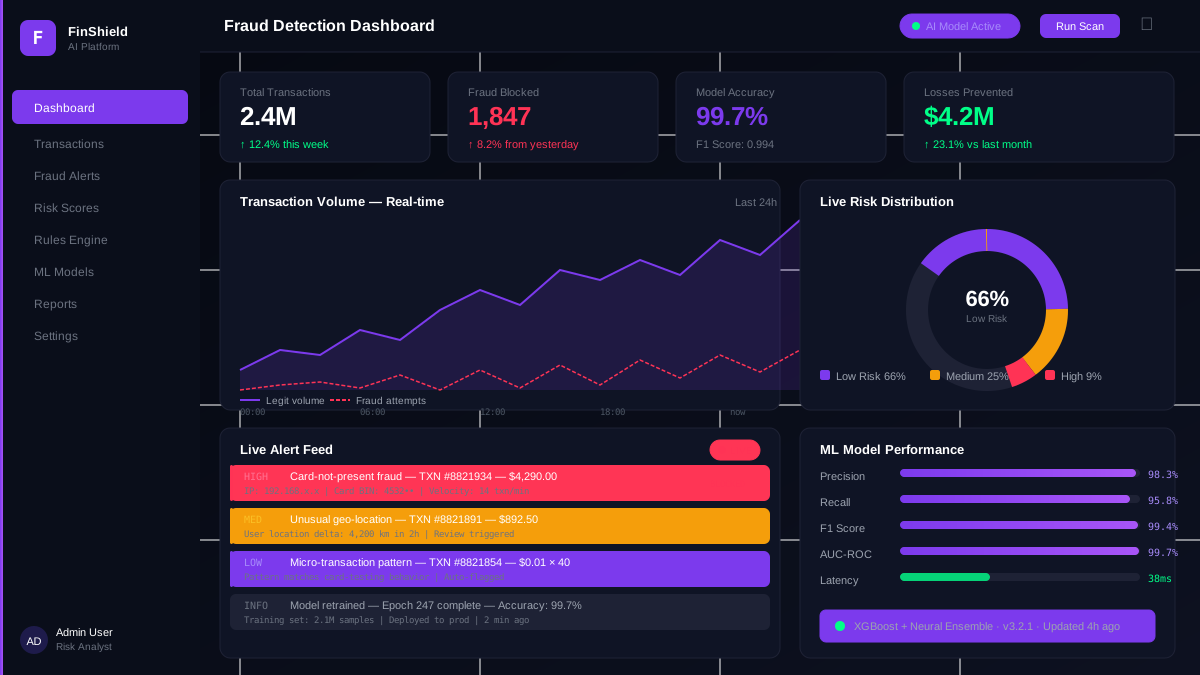
FinShield AI — Real-Time Fraud Detection Platform
A GPT-4 powered fraud intelligence system that cut false positives by 87% and processes 2....
From the Blog
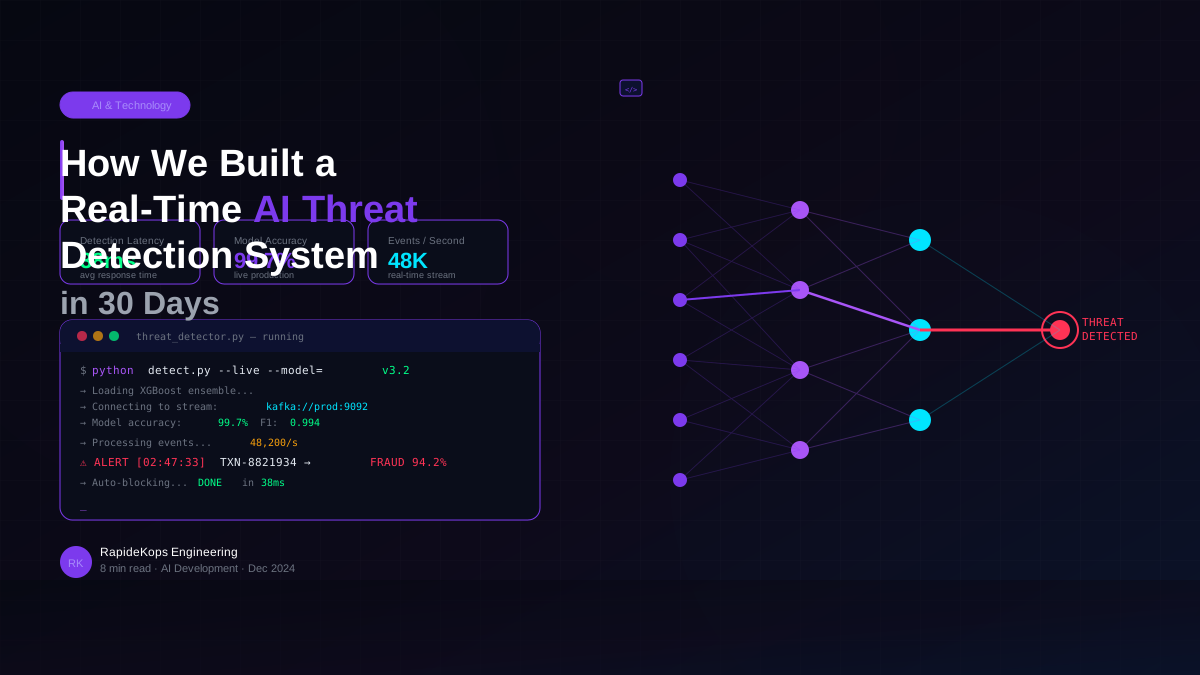
How We Built a Real-Time AI Threat Detection System in 30 Days
A behind-the-scenes look at how our team architected and shipped a GPT-4 powered threat intelligence...
Read Article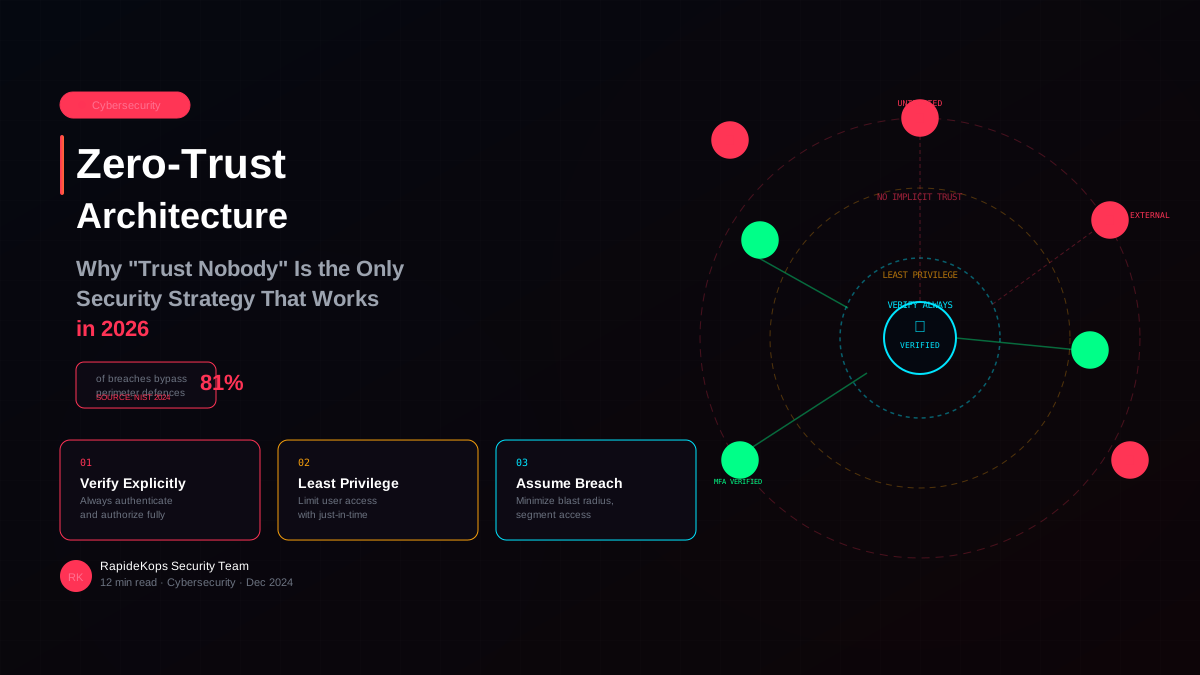
Zero-Trust Architecture: Why Trust Nobody Is the Only Security Strategy That Works in 2026
Perimeter security is dead. Here is a practical guide to implementing zero-trust architecture — the...
Read Article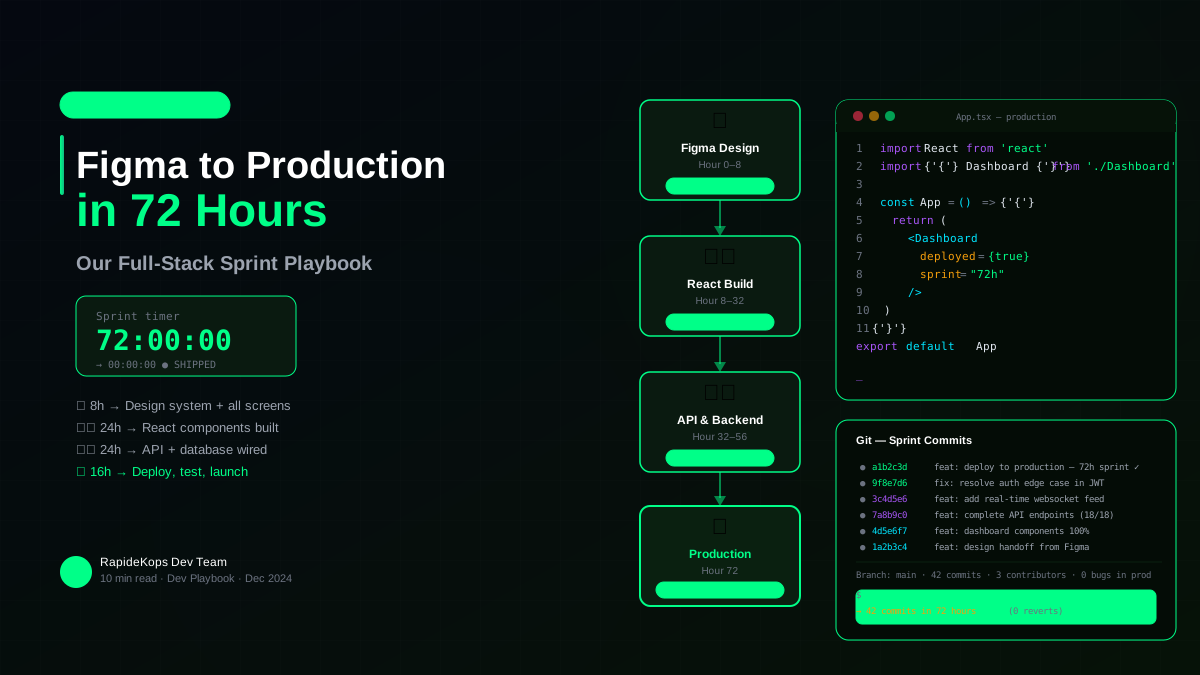
From Figma to Production in 72 Hours: Our Full-Stack Sprint Playbook
Speed without chaos. Here is the exact playbook we use to take a client from approved designs to a l...
Read ArticleReady to Ship Your First Production GenAI Product?
From proof-of-concept to production in weeks — a generative AI system your users trust and your compliance team can approve.