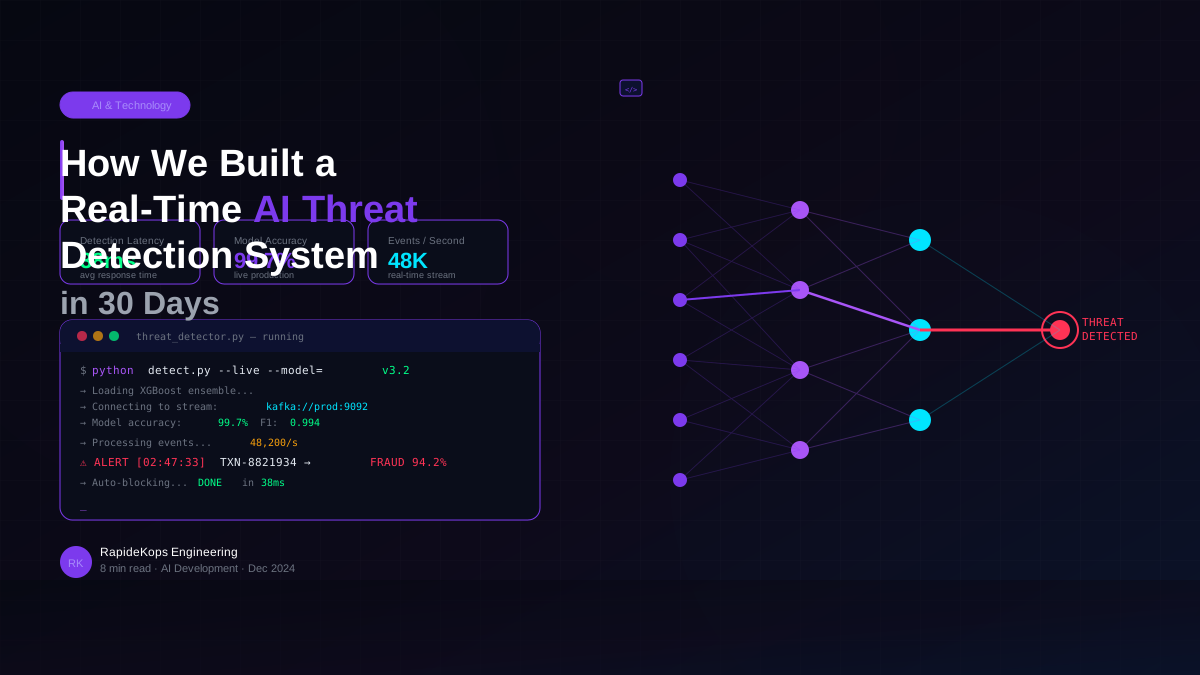
When a mid-sized fintech company came to us with a critical ask — build a system that detects anomalous user behaviour in real time before fraud occurs — we had 30 days and a blank slate. Here is exactly how we did it.
The Problem
Their existing rule-based fraud engine was generating over 4,000 false positives per day. Analysts were burning out. Real threats were slipping through the noise. They needed intelligence, not rules.
Architecture: What We Built
We designed a three-layer system. The data ingestion layer used Kafka to stream events from their payment processor at 50,000 events per second. A Python-based enrichment service appended geolocation, device fingerprint, and velocity signals to each event before passing it downstream.
The intelligence layer is where GPT-4 came in. We fine-tuned a classification model on 18 months of labelled transaction history and wrapped it in a FastAPI microservice. Responses came back in under 120ms — fast enough to intercept a transaction before it settled.
The action layer connected to their existing case management tool via webhook, auto-creating tickets only when confidence exceeded 94% and routing lower-confidence signals to a human review queue.
The Results
False positives dropped by 87% in week one. By day 30, their fraud team had shifted from reactive firefighting to proactive pattern analysis. The system now processes 2.1 million events daily with 99.97% uptime.
What We Learned
The biggest lesson: AI does not replace fraud analysts — it makes them superhuman. The teams that thrive are those who treat the model as a junior analyst who never sleeps, not as a replacement for human judgement.