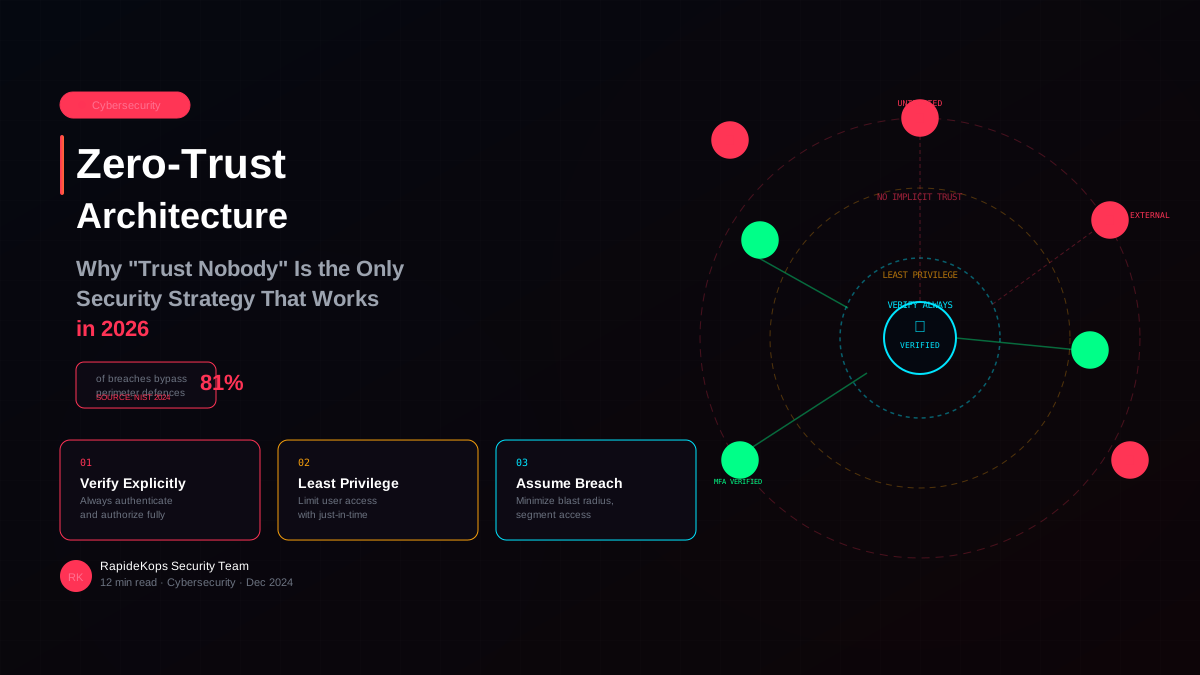
The old model was simple: build a wall, trust everything inside it. The problem is that walls have doors, and people hold them open. In 2026, with remote workforces, multi-cloud stacks, and nation-state level attackers, the perimeter no longer exists. Zero-trust is not a product — it is a philosophy.
What Zero-Trust Actually Means
Zero-trust is built on one principle: never trust, always verify. Every request — regardless of whether it originates from inside or outside your network — must be authenticated, authorised, and continuously validated. Your CEO connecting from the office gets the same scrutiny as a contractor connecting from a coffee shop.
The Five Pillars We Implement
Identity: Multi-factor authentication is the floor, not the ceiling. We implement passwordless auth using hardware keys or biometric tokens wherever possible.
Device: Managed, compliant devices only. We use device posture checks — OS version, patch status, encryption state — before granting any resource access.
Network: Micro-segmentation means a breach in one zone cannot laterally move to another. We replace flat networks with identity-aware proxies and service meshes.
Application: Applications authenticate each other, not just users. Service-to-service calls carry short-lived JWT tokens with tightly scoped permissions.
Data: Encrypt everything at rest and in transit. Classify data by sensitivity and enforce access controls at the data layer itself.
Common Mistakes to Avoid
The most common zero-trust failure we see is treating it as a one-time project. Zero-trust requires continuous monitoring, quarterly access reviews, and a culture where security is everyone's job. Start with identity. Get that right first. Everything else follows.