AI Integration
Expert AI integration services that connect OpenAI, Anthropic Claude, and custom AI models into your existing software stack — production-ready, cost-optimised, and fully documented.
AI integration services bridge the gap between cutting-edge AI models and your existing business systems. We connect large language models, computer vision APIs, speech-to-text engines, and custom ML endpoints directly into your web applications, mobile apps, CRMs, ERPs, and internal tools — with minimal disruption and maximum business impact.
Our AI integration engineers have delivered production integrations for startups, scaleups, and enterprise teams across fintech, healthcare, e-commerce, legal, and SaaS. Whether you need a single OpenAI API call embedded in a customer-facing feature or a multi-model orchestration pipeline routing queries across GPT-4o, Claude 3.5, and Gemini Pro, we design the architecture that balances capability, cost, and latency for your specific use case.
Every AI integration we ship includes production-grade authentication, rate limiting, intelligent caching, fallback handling, token budget controls, and observability dashboards. We handle prompt engineering, context window management, structured output validation, and streaming responses — so your team inherits a maintainable, well-documented integration rather than a fragile prototype.
-
AI model selection, benchmarking, and cost-per-token optimisation
-
Production API integration with authentication, caching, and rate limiting
-
Prompt engineering layer with versioned templates and A/B testing
-
Streaming responses, structured JSON output, and schema validation
-
Fallback chains and circuit breakers for 99.9% availability
-
Observability dashboard tracking latency, cost, quality, and errors
Why RapideKops?
- Hands-on experience with OpenAI, Anthropic, Gemini, Mistral, and Llama
- We benchmark accuracy, latency, and cost before committing to a model
- Prompt templates are versioned and tested like production code
- Every token logged and traceable — full observability from day one
- Privacy-first: data flow audit before connecting any AI to your production database
- You own the integration code — zero vendor lock-in on our implementation
Our Delivery Process
Model Assessment
We evaluate your use case against leading AI providers and run benchmark tests to recommend the optimal model on accuracy, cost, and latency.
Integration Design
We design the full integration layer — authentication, caching strategy, prompt templates, retry logic, and fallback chains — before a single production line is written.
Staged Rollout
The integration launches behind a feature flag, allowing real-traffic testing and cost validation before full release.
Monitor & Optimise
Post-launch dashboards track token spend, latency percentiles, and output quality. We iterate until performance targets are sustained.
Frequently Asked Questions
Recent Work
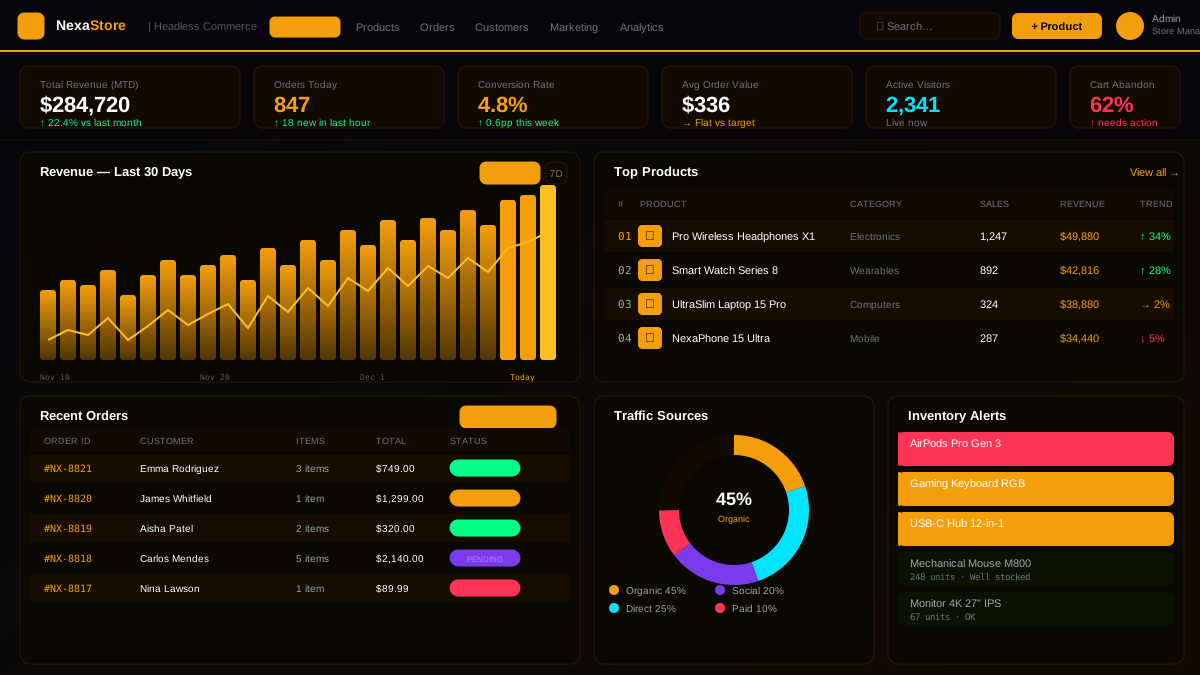
NexaStore — Headless E-Commerce Platform
A high-performance headless e-commerce platform handling 50,000 daily transactions with su...
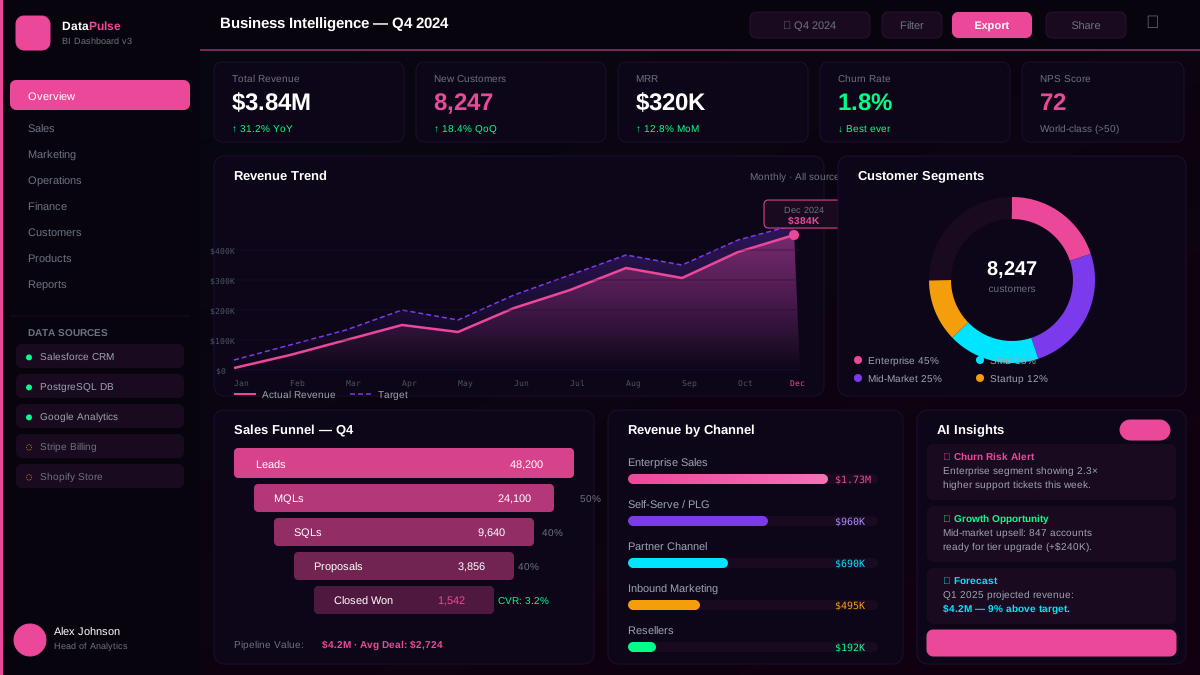
DataPulse — Business Intelligence Dashboard
A natural-language BI dashboard that lets non-technical executives query company data in p...
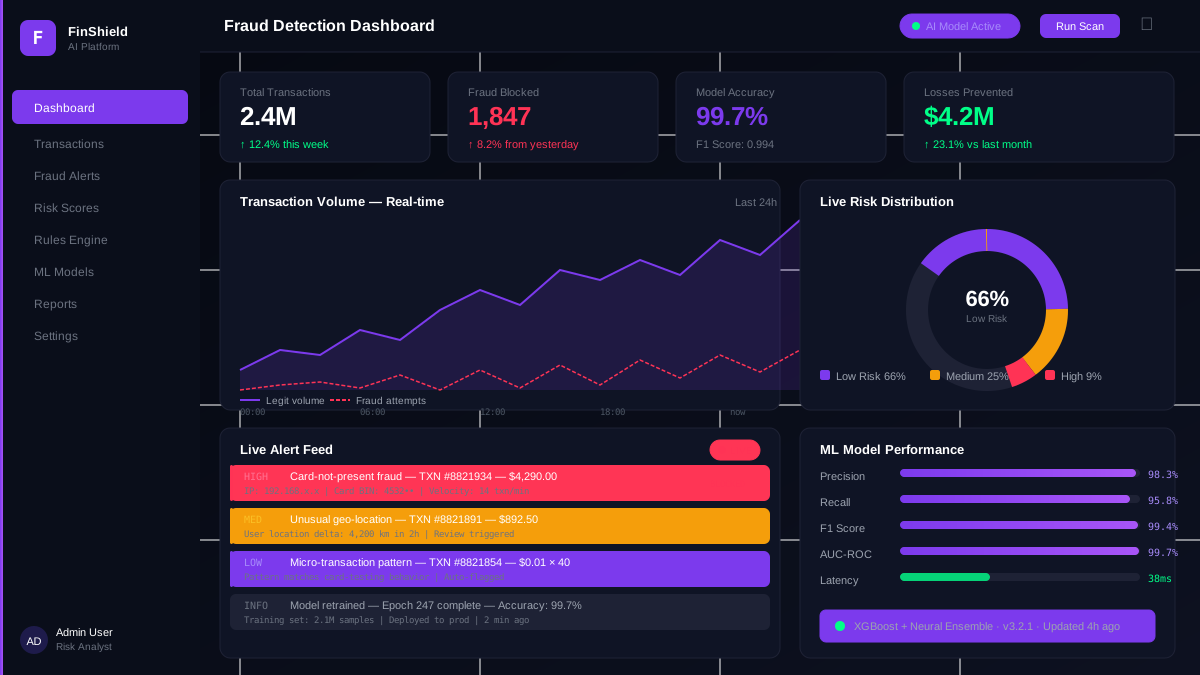
FinShield AI — Real-Time Fraud Detection Platform
A GPT-4 powered fraud intelligence system that cut false positives by 87% and processes 2....
From the Blog
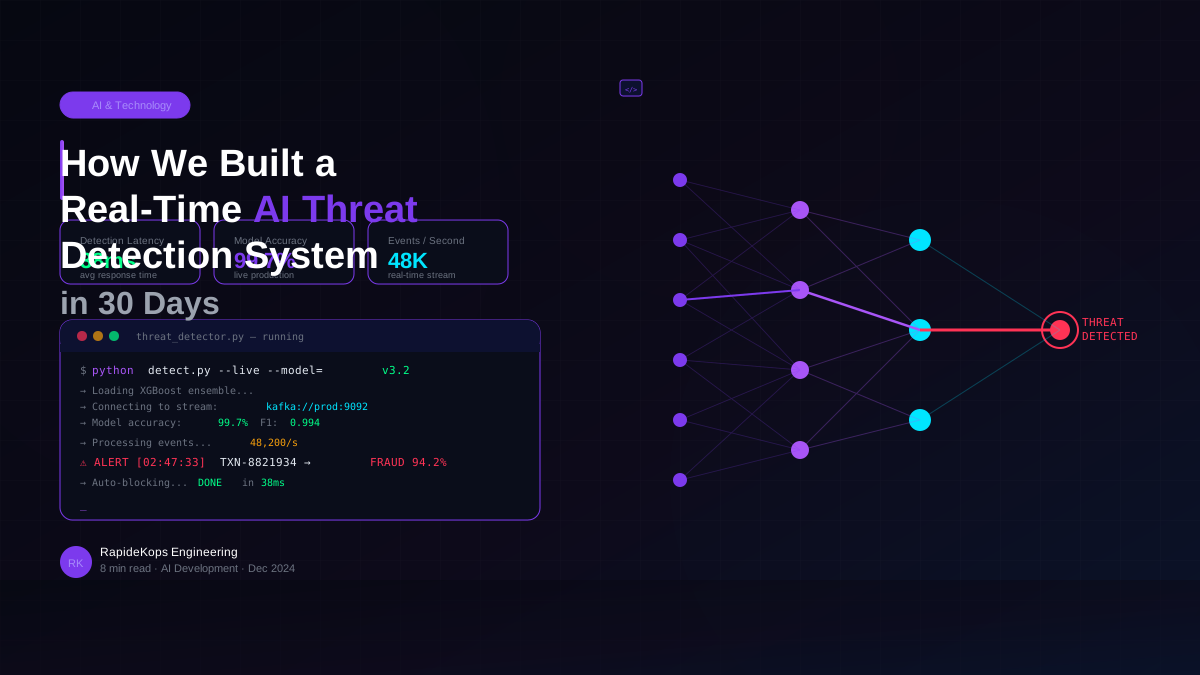
How We Built a Real-Time AI Threat Detection System in 30 Days
A behind-the-scenes look at how our team architected and shipped a GPT-4 powered threat intelligence...
Read Article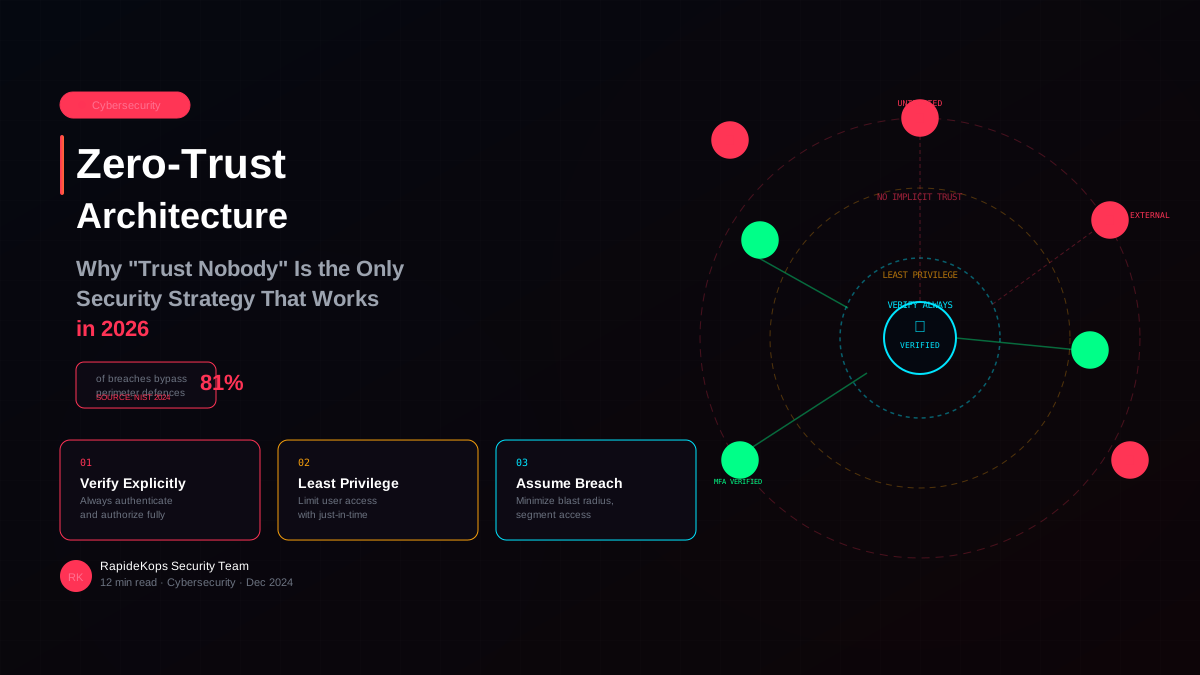
Zero-Trust Architecture: Why Trust Nobody Is the Only Security Strategy That Works in 2026
Perimeter security is dead. Here is a practical guide to implementing zero-trust architecture — the...
Read Article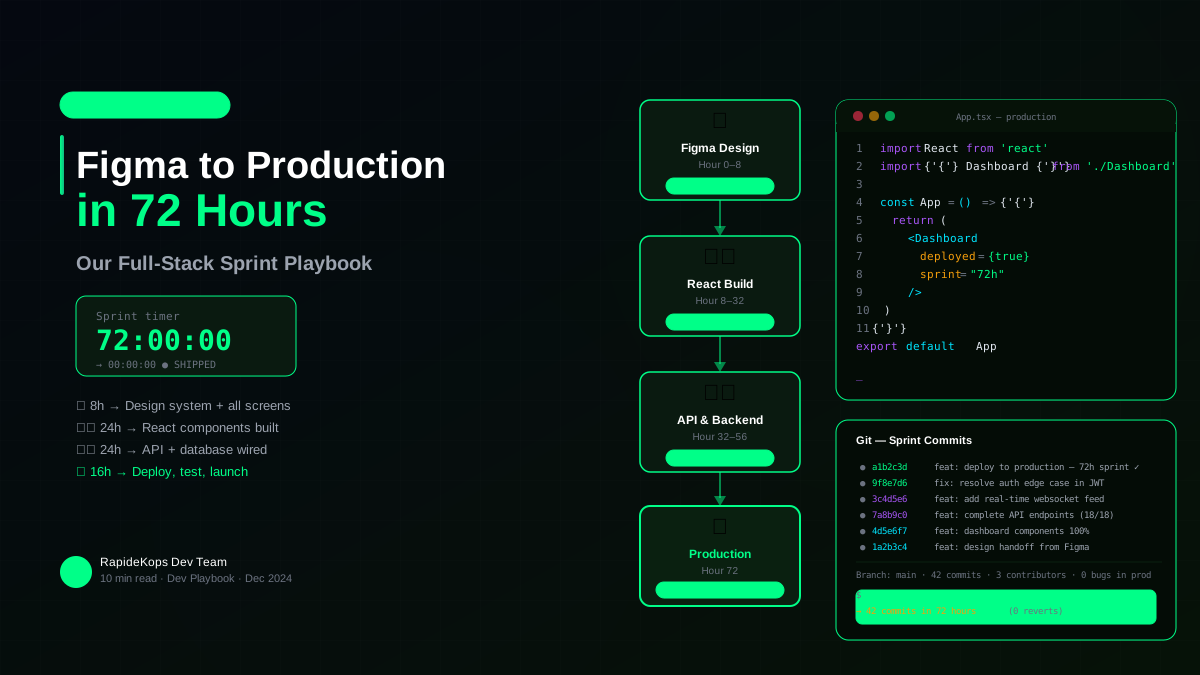
From Figma to Production in 72 Hours: Our Full-Stack Sprint Playbook
Speed without chaos. Here is the exact playbook we use to take a client from approved designs to a l...
Read ArticleReady to Add AI to Your Product?
Tell us your use case and we will recommend the right model, integration architecture, and cost structure — no lock-in, no black boxes.