Computer Vision
Custom computer vision development services — object detection, image classification, OCR, defect inspection, and real-time video AI built for cloud or edge deployment.
Computer vision AI gives your systems the ability to see, understand, and act on visual data at machine speed and scale. We build custom computer vision solutions for object detection and tracking in video streams, image classification and recognition, optical character recognition (OCR) for document processing, defect detection in manufacturing quality control, medical image analysis, biometric verification, and retail shelf analytics.
Our computer vision stack combines PyTorch, TensorFlow, and OpenCV with state-of-the-art architectures including YOLO v8, Segment Anything Model (SAM), Vision Transformers (ViT), and EfficientNet — selected based on your accuracy, latency, and deployment environment requirements. We have shipped computer vision systems for retail, logistics, manufacturing, agriculture, healthcare, and security industries, processing millions of images daily.
Deployment flexibility is core to our approach. We optimise and export models in ONNX, TensorRT, and Core ML formats for edge deployment on NVIDIA Jetson, Raspberry Pi, and mobile devices, as well as containerised cloud inference on AWS, GCP, and Azure. Every system includes explainability overlays so human operators can audit model decisions, and monitoring dashboards tracking accuracy, throughput, and data drift in production.
-
Custom model training on your labelled dataset with transfer learning
-
Data annotation pipeline setup with quality assurance workflows
-
Real-time and batch inference REST API with confidence scoring
-
Edge deployment packages: ONNX, TensorRT, Core ML, and OpenVINO
-
Video stream processing with real-time alerting, logging, and replay
-
Model performance reports: accuracy, precision, recall, and confusion matrices
Why RapideKops?
- Domain experience across manufacturing, retail, logistics, healthcare, and security
- We design your data labelling strategy — not just train on whatever you hand us
- Edge and cloud deployment delivered within the same engagement — you choose
- Explainability overlays included so operators can audit and trust model decisions
- Models are robust to real-world conditions: lighting variation, occlusion, and angle changes
- GDPR and biometric data handling compliance guidance included as standard
Our Delivery Process
Dataset Strategy
We audit your visual data, identify class imbalances and labelling gaps, and build an annotation pipeline that produces clean, representative training sets.
Model Selection & Training
We select and fine-tune the right architecture — YOLO, ResNet, ViT, or SAM — validated against your accuracy, latency, and hardware targets.
Optimise for Deployment
We quantise, prune, and export models to ONNX or TensorRT for edge deployment, or containerise for cloud auto-scaling with GPU inference.
Integrate & Monitor
The vision system integrates into your product with real-time dashboards showing accuracy, throughput, confidence distribution, and model drift.
Frequently Asked Questions
Recent Work
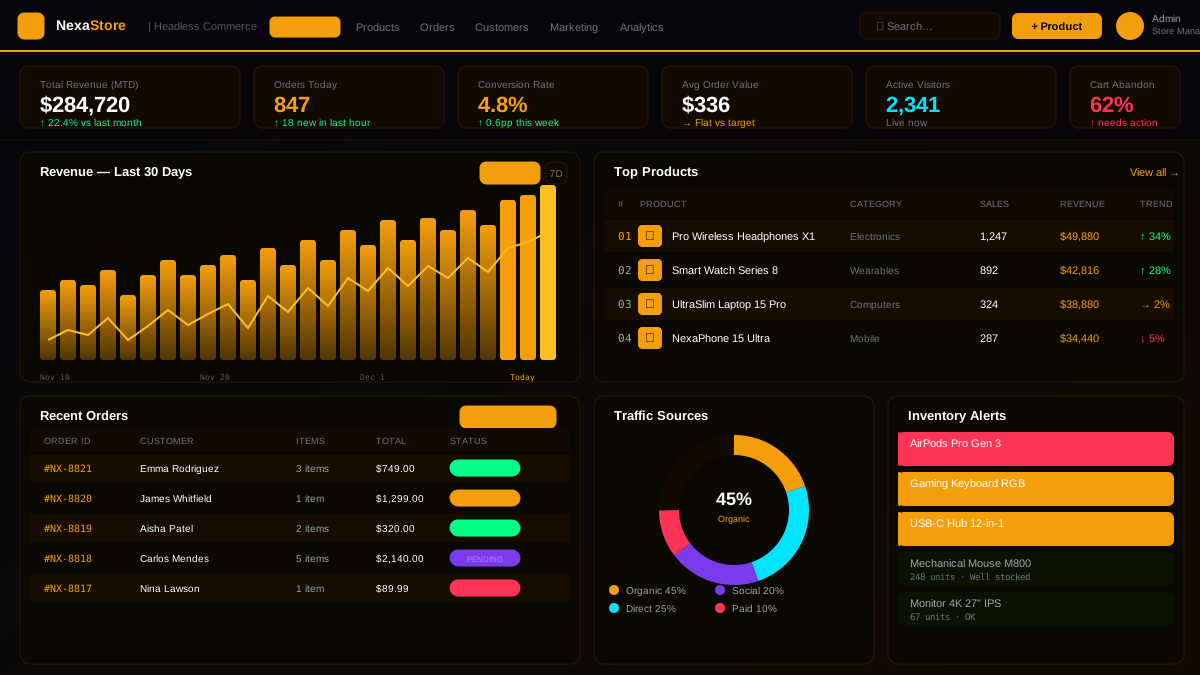
NexaStore — Headless E-Commerce Platform
A high-performance headless e-commerce platform handling 50,000 daily transactions with su...
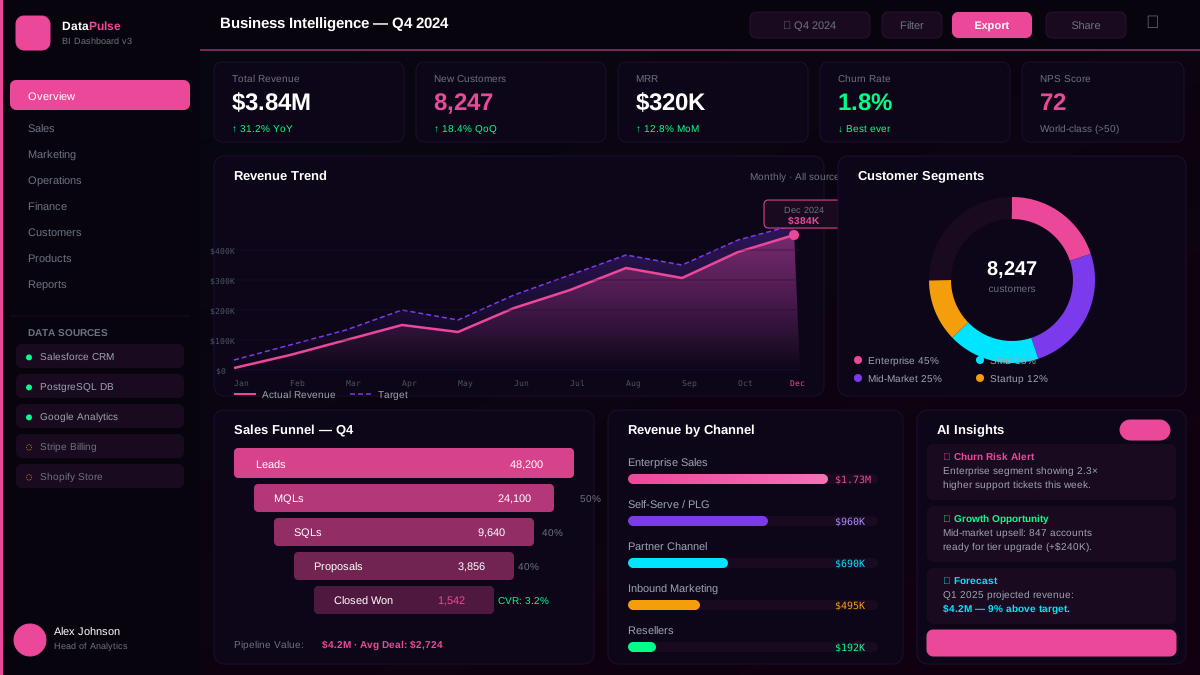
DataPulse — Business Intelligence Dashboard
A natural-language BI dashboard that lets non-technical executives query company data in p...
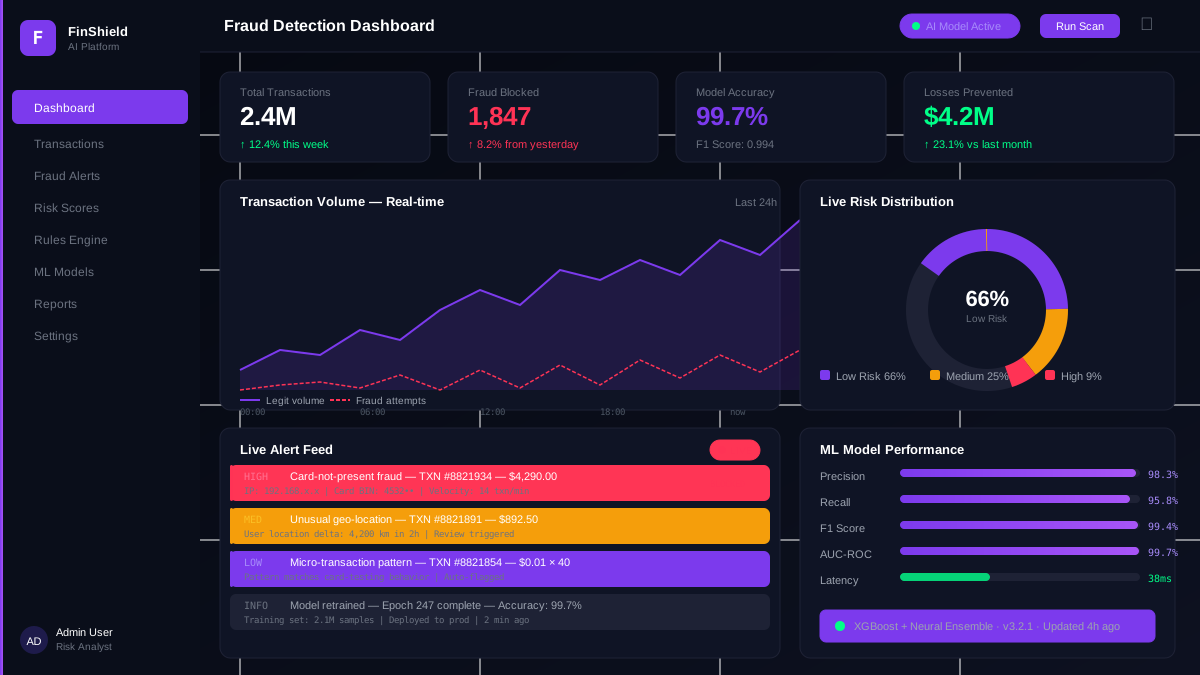
FinShield AI — Real-Time Fraud Detection Platform
A GPT-4 powered fraud intelligence system that cut false positives by 87% and processes 2....
From the Blog
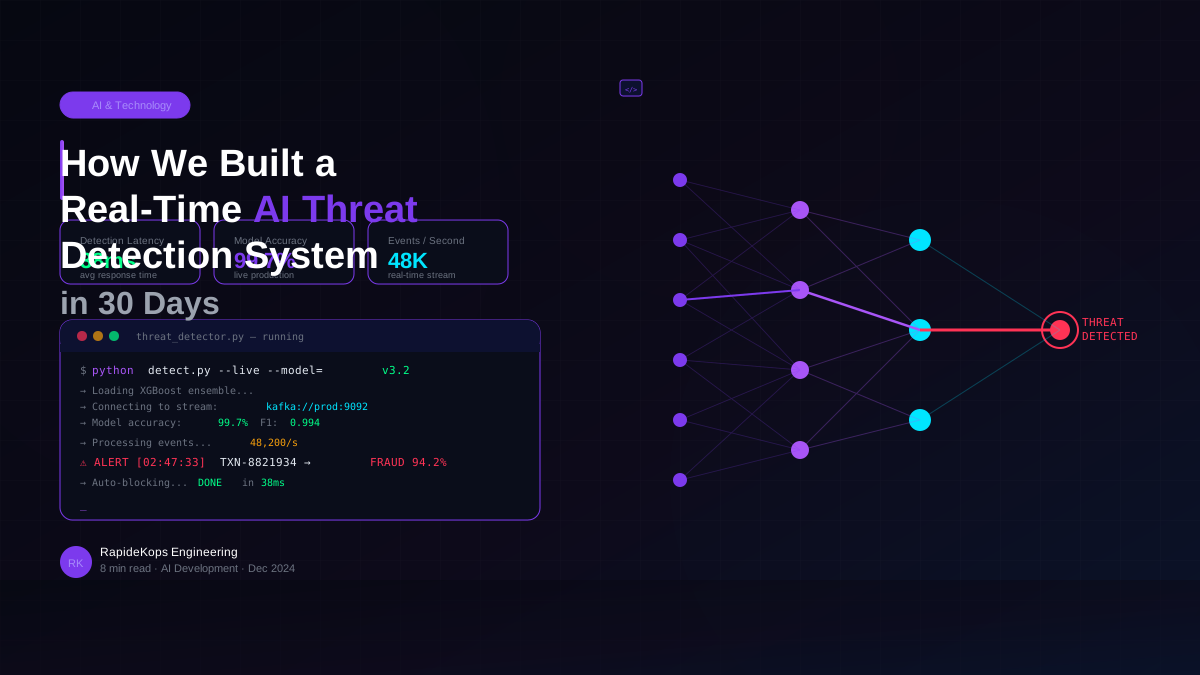
How We Built a Real-Time AI Threat Detection System in 30 Days
A behind-the-scenes look at how our team architected and shipped a GPT-4 powered threat intelligence...
Read Article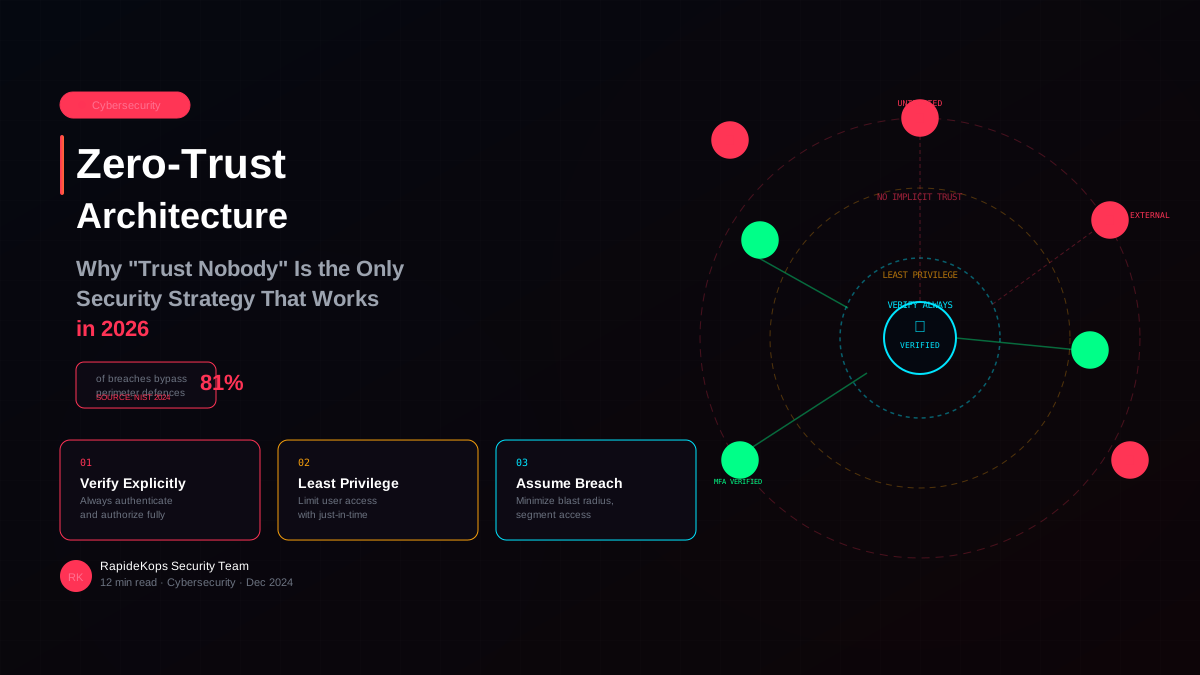
Zero-Trust Architecture: Why Trust Nobody Is the Only Security Strategy That Works in 2026
Perimeter security is dead. Here is a practical guide to implementing zero-trust architecture — the...
Read Article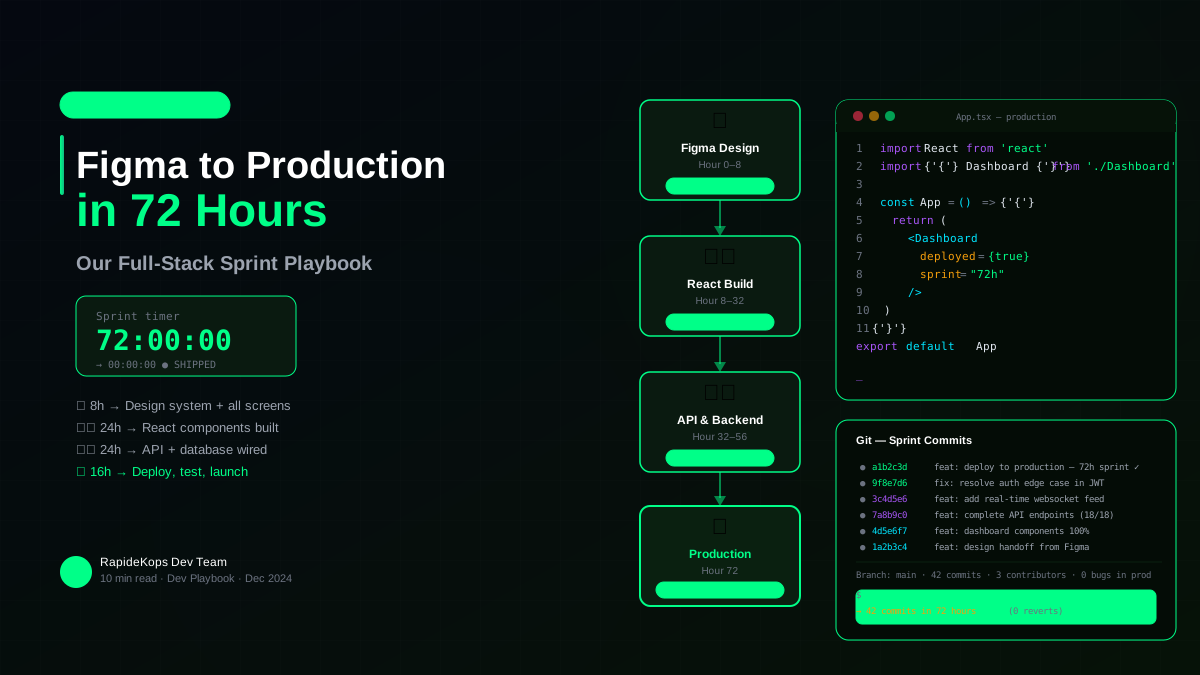
From Figma to Production in 72 Hours: Our Full-Stack Sprint Playbook
Speed without chaos. Here is the exact playbook we use to take a client from approved designs to a l...
Read ArticleReady to Give Your Systems the Power to See?
Tell us what your system needs to detect or classify — we will design, train, and deploy a vision model that performs in the real world.