Cloud Security
Cloud security consulting and implementation — secure your AWS, Azure, and GCP environments with infrastructure hardening, misconfiguration remediation, CSPM, and continuous compliance monitoring.
Cloud misconfigurations are the leading cause of enterprise data breaches — publicly exposed S3 buckets, overpermissioned IAM roles, unencrypted databases, and disabled security logging have all led to headline breaches involving millions of records. Our cloud security services identify and remediate these misconfigurations, implement defence-in-depth across your cloud infrastructure, and configure continuous compliance monitoring so new vulnerabilities are caught in hours — not months after a breach.
We conduct comprehensive cloud security posture assessments across AWS, Microsoft Azure, and Google Cloud Platform — evaluating IAM permissions and privilege escalation paths, network security group configurations, storage access controls, encryption-at-rest and in-transit coverage, logging and monitoring gaps, and container and Kubernetes security. We use Cloud Security Posture Management (CSPM) tools including AWS Security Hub, Microsoft Defender for Cloud, and Prisma Cloud alongside manual assessment techniques that automated tools miss.
Remediation is delivered as Terraform or CloudFormation Infrastructure as Code so security controls are version-controlled, peer-reviewed, and reproducible across environments. We implement security guardrails as AWS Service Control Policies, Azure Policy, or GCP Organisation Policies that prevent misconfiguration from being introduced by any team member going forward. Continuous compliance monitoring dashboards give your engineering and security teams real-time visibility into your cloud security posture — with automated alerts for any deviation from your baseline.
-
Cloud security posture assessment across IAM, network, storage, logging, and compute
-
Misconfiguration remediation delivered as Terraform or CloudFormation IaC
-
IAM least-privilege audit: unused permissions, privilege escalation paths, and service account hardening
-
Encryption-at-rest and in-transit coverage audit with gap remediation
-
CSPM platform implementation with continuous compliance monitoring dashboards
-
Security guardrails as SCPs (AWS), Azure Policy, or GCP Org Policies to prevent misconfiguration recurrence
Why RapideKops?
- Manual assessment techniques find privilege escalation paths that CSPM tools consistently miss
- Remediation delivered as IaC — security controls are version-controlled and reproducible
- Security guardrails prevent new misconfigurations from being introduced after we leave
- CIS Benchmark and AWS/Azure/GCP Well-Architected Framework alignment documented
- Continuous monitoring dashboards give your team real-time cloud security posture visibility
- We work within your existing CI/CD pipeline — security checks integrated into your deployment process
Our Delivery Process
Cloud Security Assessment
We assess your cloud environment across IAM, network, storage, logging, encryption, and compute — producing a risk-prioritised finding register with severity ratings and remediation steps.
Remediation Planning
We produce a remediation roadmap prioritised by risk, with effort estimates and Terraform/CloudFormation code for every technical control — reviewed before any change is applied to production.
Hardening Implementation
We apply security controls across your cloud environment using Infrastructure as Code, implement security guardrails to prevent future misconfiguration, and configure CSPM monitoring.
Continuous Monitoring
CSPM dashboards and alerting are configured so your team sees new security findings in real time — with weekly security posture reports and monthly trend analysis.
Frequently Asked Questions
Recent Work
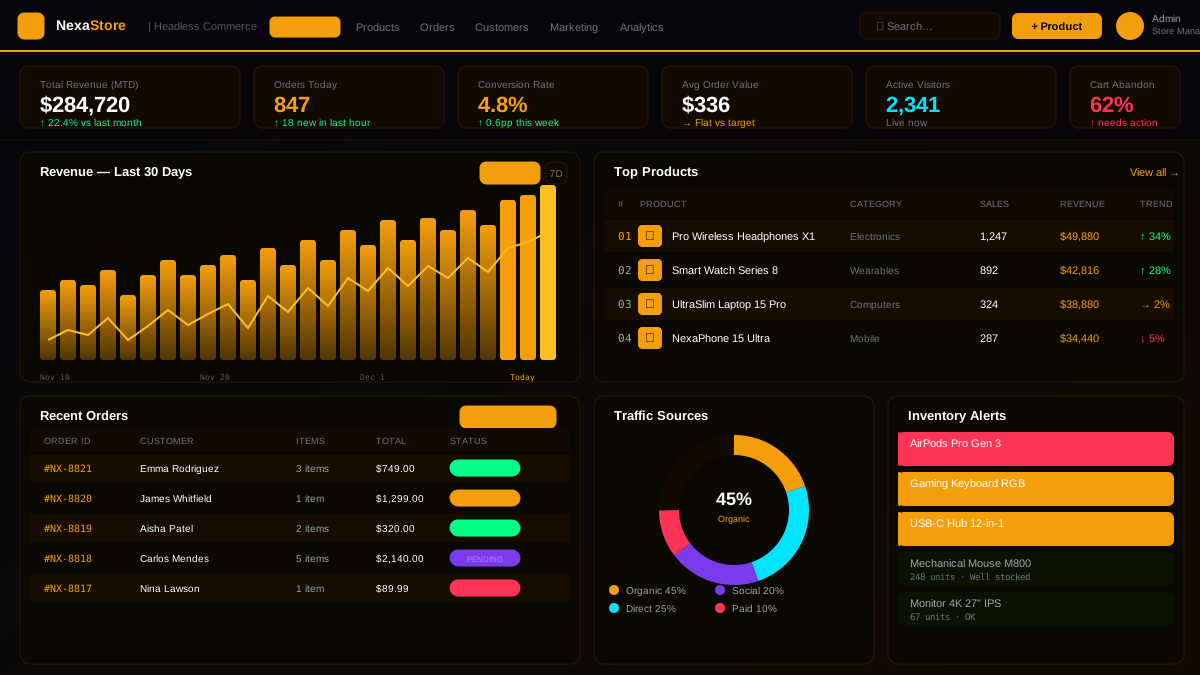
NexaStore — Headless E-Commerce Platform
A high-performance headless e-commerce platform handling 50,000 daily transactions with su...
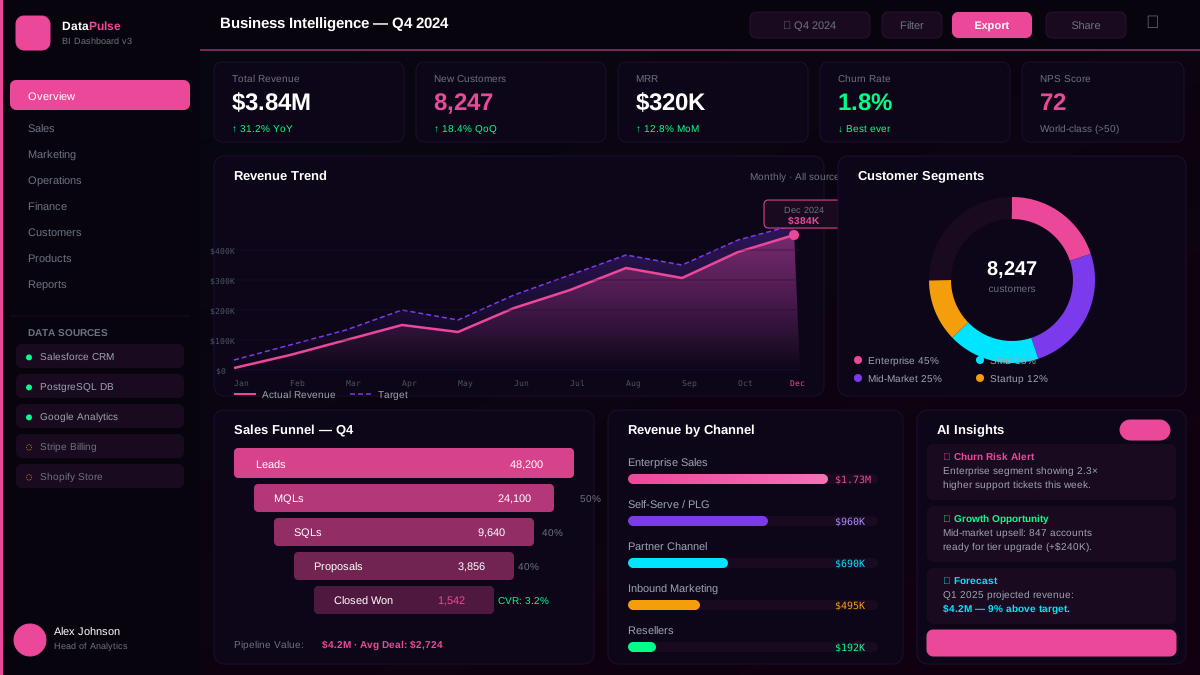
DataPulse — Business Intelligence Dashboard
A natural-language BI dashboard that lets non-technical executives query company data in p...
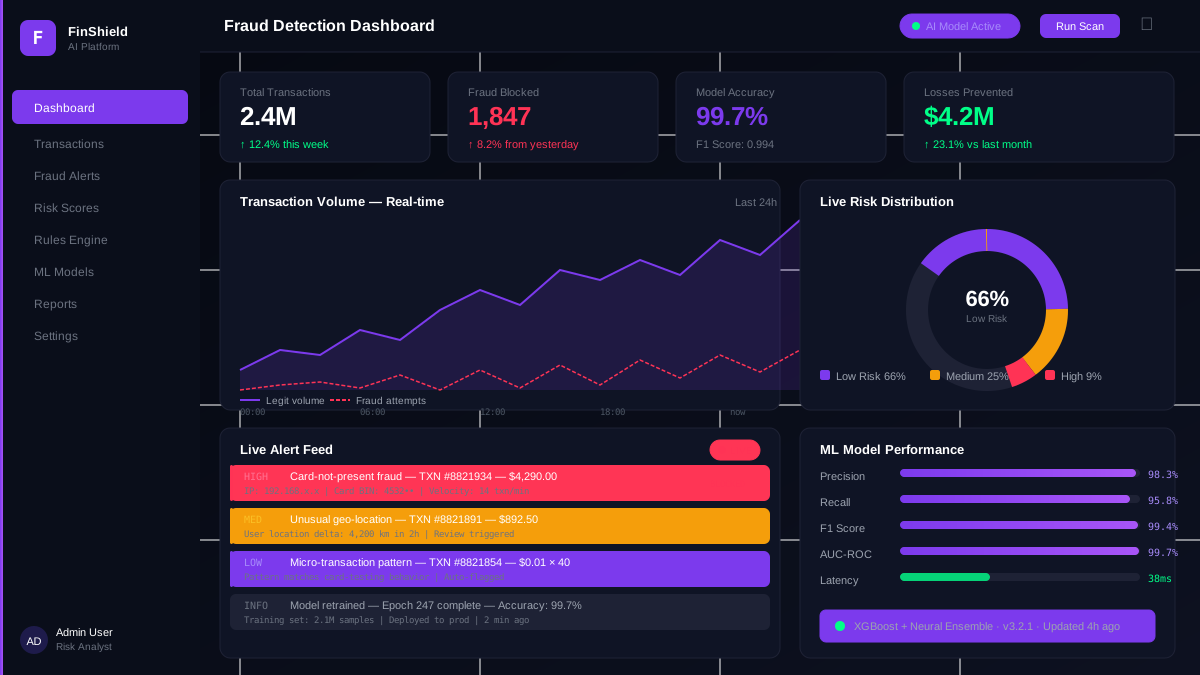
FinShield AI — Real-Time Fraud Detection Platform
A GPT-4 powered fraud intelligence system that cut false positives by 87% and processes 2....
From the Blog
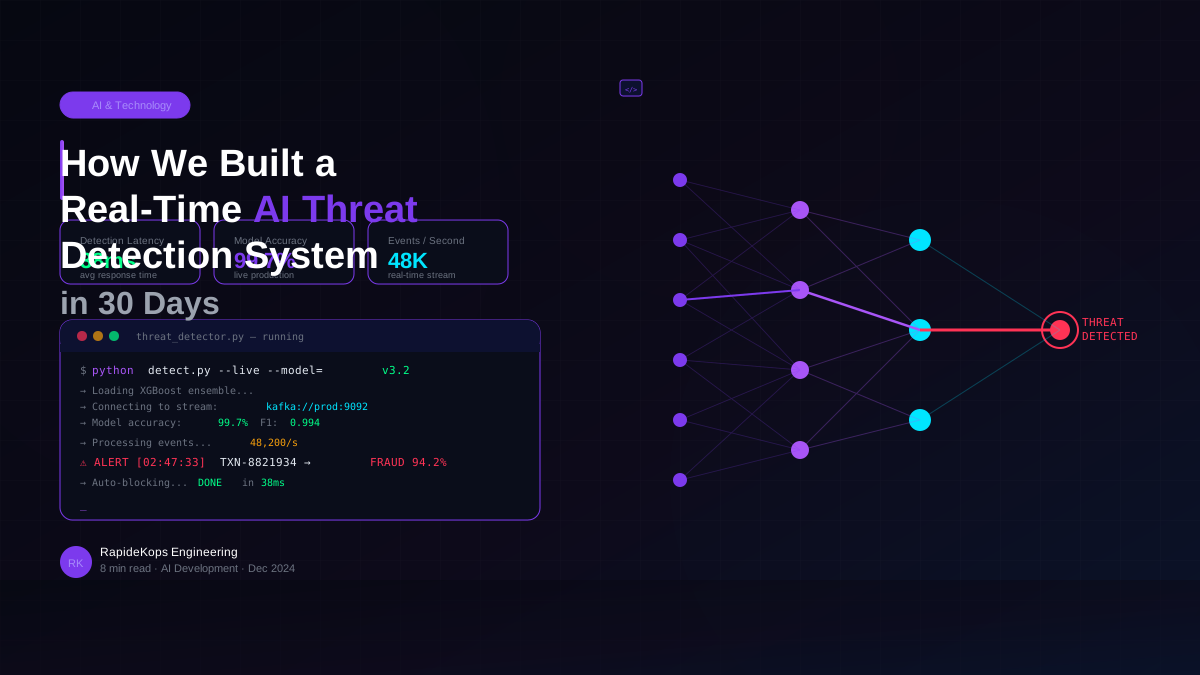
How We Built a Real-Time AI Threat Detection System in 30 Days
A behind-the-scenes look at how our team architected and shipped a GPT-4 powered threat intelligence...
Read Article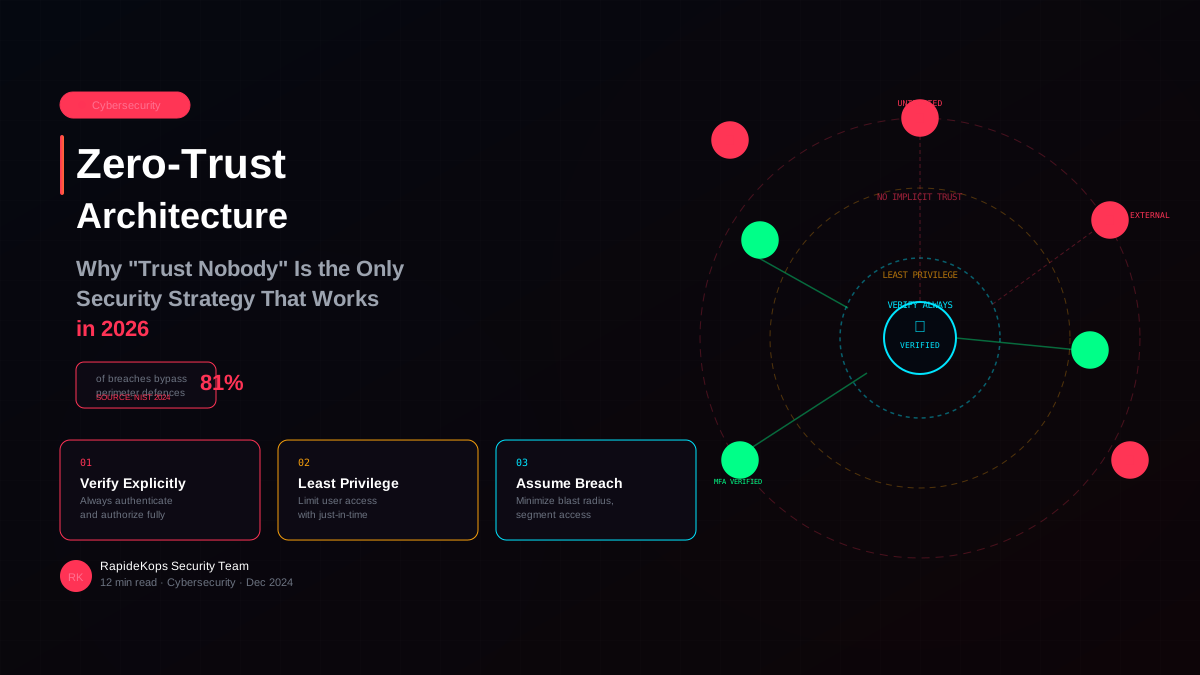
Zero-Trust Architecture: Why Trust Nobody Is the Only Security Strategy That Works in 2026
Perimeter security is dead. Here is a practical guide to implementing zero-trust architecture — the...
Read Article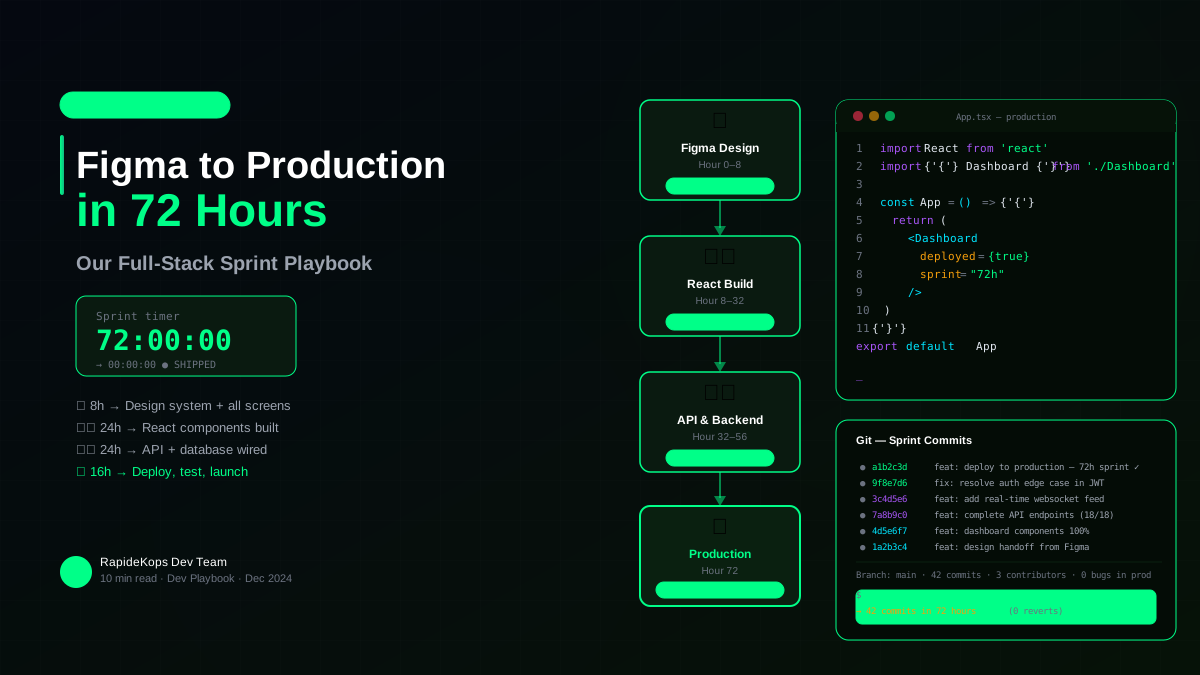
From Figma to Production in 72 Hours: Our Full-Stack Sprint Playbook
Speed without chaos. Here is the exact playbook we use to take a client from approved designs to a l...
Read ArticleReady to Secure Your Cloud Infrastructure?
Cloud security posture assessment, misconfiguration remediation, and continuous monitoring — so your infrastructure stays secure as it scales.