Full-Stack Development
Full stack web development services — end-to-end web applications from database design to pixel-perfect frontend, delivered by one cohesive team with no hand-offs and no communication gaps.
Full stack web development means one team owns your entire application — database schema, API design, business logic, authentication, and UI — eliminating the hand-off failures and communication gaps that fragment development across separate frontend and backend contractors. Our full stack engineers design and build cohesive applications where every layer is optimised for the others, with consistent TypeScript types flowing from database to UI.
We have delivered full stack web applications for SaaS platforms, marketplaces, B2B portals, e-commerce systems, booking and scheduling tools, real-time collaboration products, and data-intensive dashboards across healthcare, fintech, logistics, legal, and professional services industries. Our backend stack centres on Laravel and Node.js with PostgreSQL and Redis, and our frontend stack centres on React with Next.js — chosen for performance, SEO capability, and long-term maintainability.
OWASP Top 10 security practices are embedded at every layer: SQL injection prevention, CSRF protection, XSS sanitisation, rate limiting, secrets management, and security headers configured by default. Infrastructure is provisioned as Terraform code, CI/CD pipelines are configured from day one, structured logging and application performance monitoring are built in at launch — not bolted on when something breaks in production six months later.
-
Database design: schema, migrations, indexing strategy, and query optimisation
-
RESTful or GraphQL API with OpenAPI 3.0 documentation and versioning
-
React / Next.js frontend with full TypeScript and WCAG accessibility compliance
-
Authentication: JWT, OAuth 2.0, OIDC, or session-based with refresh token rotation
-
Automated test suite: unit, integration, and end-to-end tests with CI enforcement
-
Infrastructure as Code (Terraform), CI/CD pipeline, and APM monitoring configured at launch
Why RapideKops?
- One team owns the full stack — zero hand-off delays, zero frontend-backend miscommunication
- OWASP security practices embedded in every layer — not addressed post-audit
- Database queries profiled and N+1 problems eliminated before production deployment
- API contracts defined, versioned, and documented before frontend development begins
- Shared TypeScript types between frontend and backend — no schema drift between layers
- Monitoring, structured logging, and alerting configured on launch day — not after first incident
Our Delivery Process
Architecture Design
We design the full system: data model, API contracts, frontend component structure, authentication strategy, and infrastructure — before writing production code.
Backend First
We build and fully test the API layer before the frontend begins. A stable, documented backend makes frontend development predictable and significantly faster.
Frontend Build
With the API stable, we build the UI in focused two-week sprints — reviewed by your team for interaction design and visual fidelity at every milestone.
Harden & Deploy
Security audit, performance profiling, test coverage review, accessibility check, and zero-downtime production deployment with full APM monitoring active from launch.
Frequently Asked Questions
Recent Work
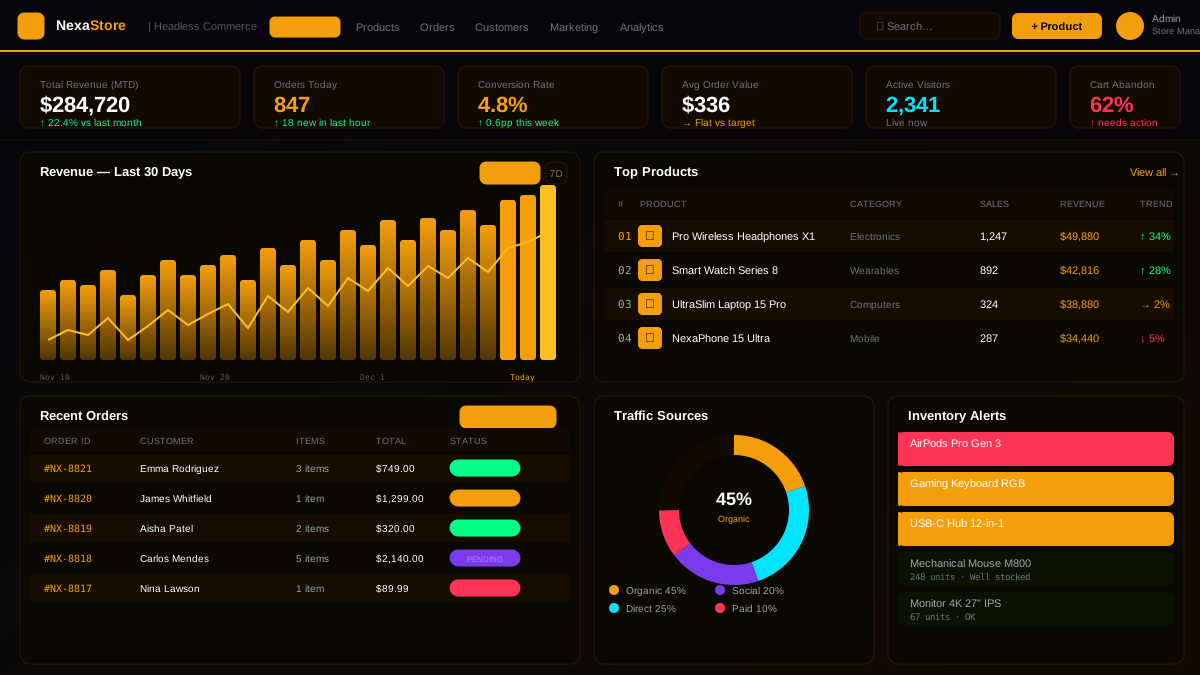
NexaStore — Headless E-Commerce Platform
A high-performance headless e-commerce platform handling 50,000 daily transactions with su...
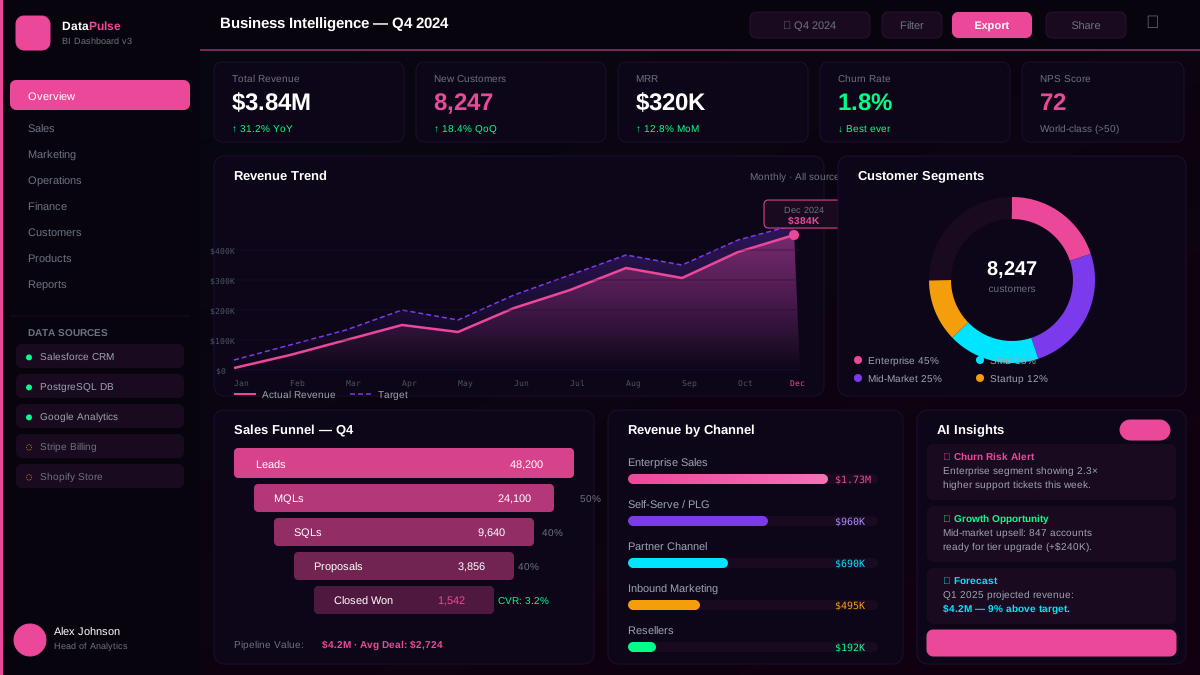
DataPulse — Business Intelligence Dashboard
A natural-language BI dashboard that lets non-technical executives query company data in p...
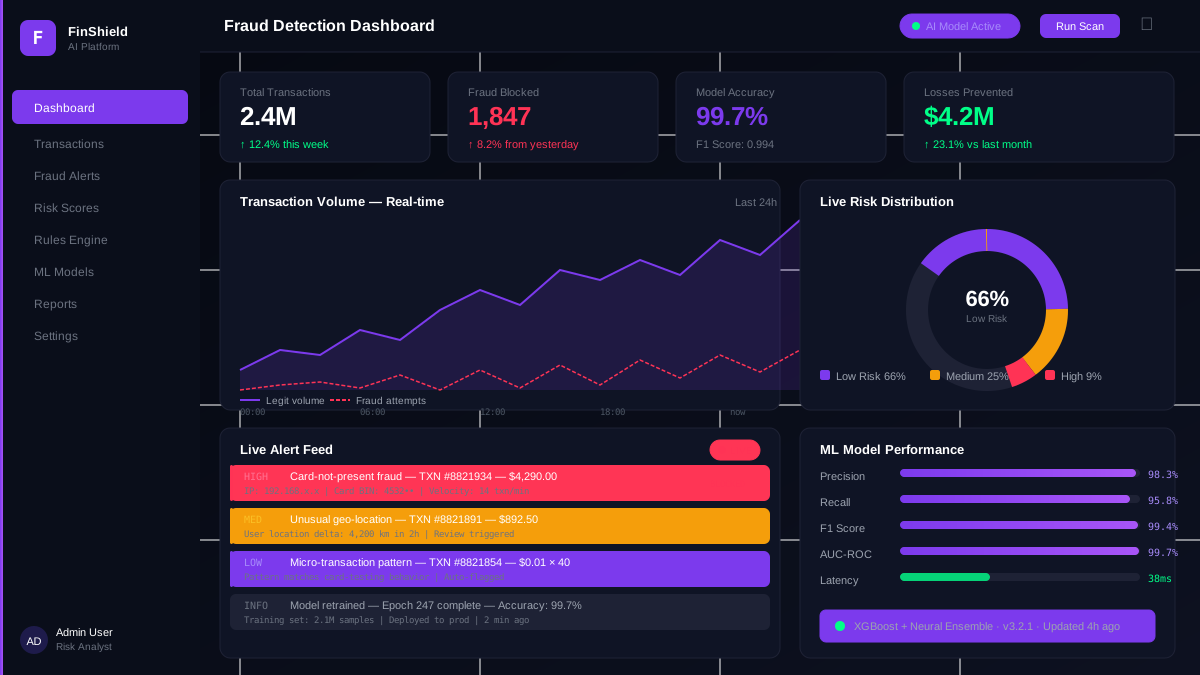
FinShield AI — Real-Time Fraud Detection Platform
A GPT-4 powered fraud intelligence system that cut false positives by 87% and processes 2....
From the Blog
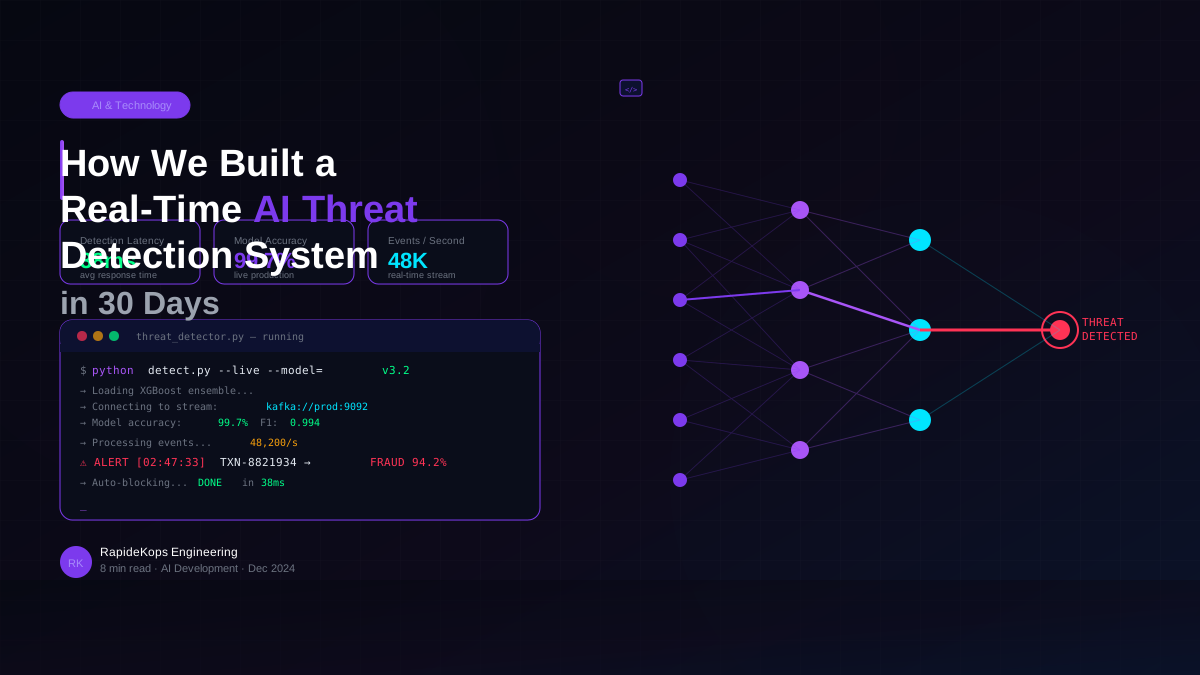
How We Built a Real-Time AI Threat Detection System in 30 Days
A behind-the-scenes look at how our team architected and shipped a GPT-4 powered threat intelligence...
Read Article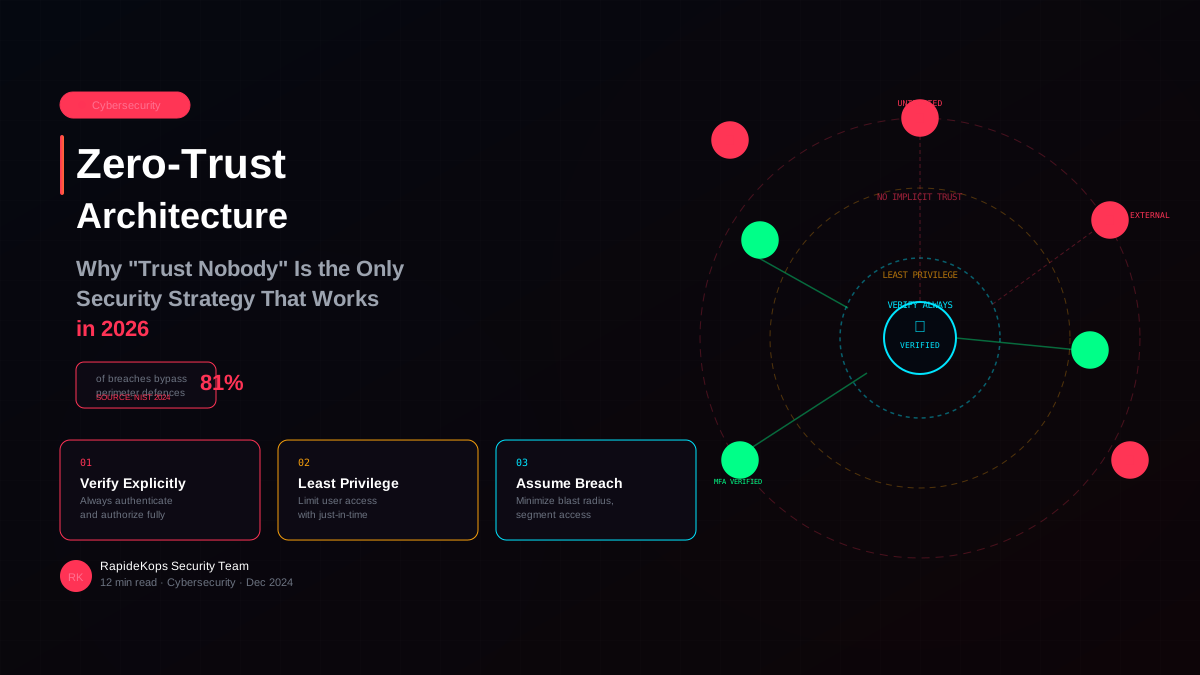
Zero-Trust Architecture: Why Trust Nobody Is the Only Security Strategy That Works in 2026
Perimeter security is dead. Here is a practical guide to implementing zero-trust architecture — the...
Read Article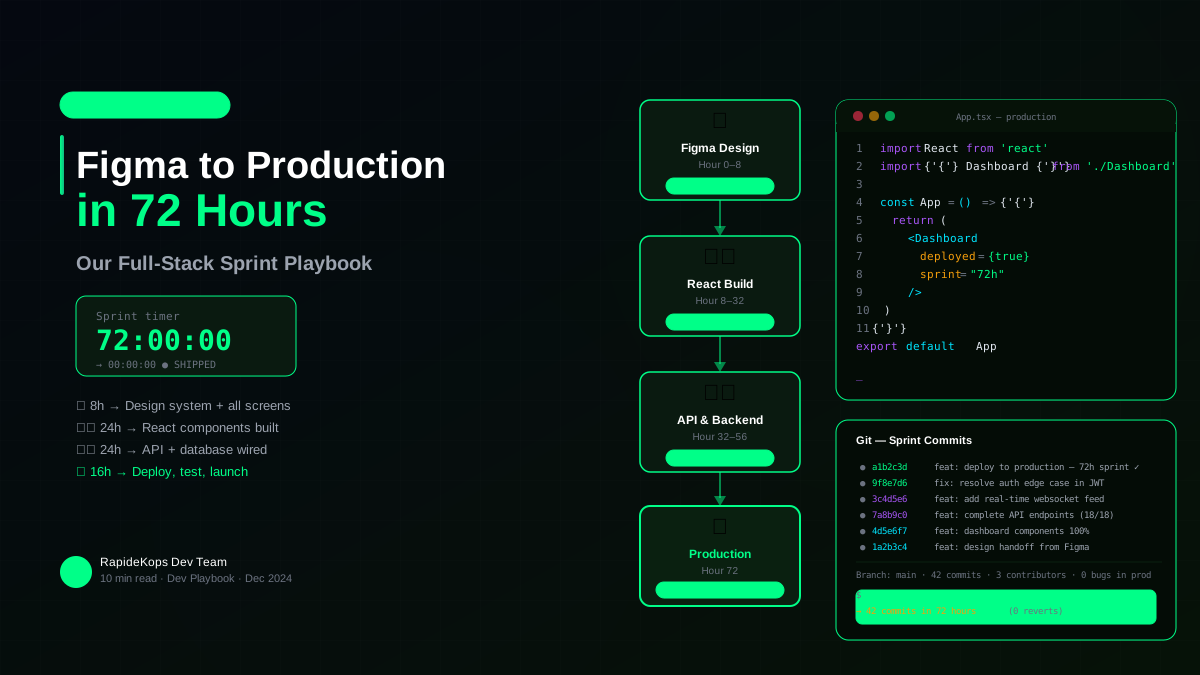
From Figma to Production in 72 Hours: Our Full-Stack Sprint Playbook
Speed without chaos. Here is the exact playbook we use to take a client from approved designs to a l...
Read ArticleReady to Build Your Web Application With One Accountable Team?
Full ownership of your stack, zero hand-offs, zero gaps — we design and ship applications your users and your engineers will be proud of.