Legacy System Modernization
Legacy system modernization services — migrate ageing software to modern architecture using proven incremental strategies that keep your business running throughout the transition.
Legacy systems accumulate technical debt, security vulnerabilities, operational cost, and hiring difficulty at a compounding rate. But the fear of a high-risk big-bang rewrite keeps many organisations trapped. Our legacy system modernization services use proven incremental migration strategies — strangler fig pattern, microservices extraction, database migration, and re-platforming — that keep your business operating throughout the entire transformation without high-stakes cutover weekends.
We have modernised legacy systems built on PHP 5, Classic ASP, ColdFusion, VB6, Oracle Forms, and aged Java applications — migrating them to Laravel, Django, Node.js, Next.js, and modern cloud infrastructure. Database migrations from MySQL, MSSQL, Oracle, and DB2 to PostgreSQL on AWS RDS are a core competency, including schema transformation, data quality remediation, and ETL pipelines that run in parallel to validate zero data loss before the legacy system is decommissioned.
Every modernisation engagement begins with a detailed technical audit — architecture documentation, code quality assessment, dependency mapping, and a prioritised risk register — so you know exactly what you are dealing with before committing to a plan. Our migration approach maintains rollback capability at every stage: you are never more than one step away from falling back to the known working state.
-
Technical audit: architecture documentation, risk register, and migration plan
-
Strangler fig or incremental migration pattern implementation
-
Database schema migration with ETL pipelines and parallel validation
-
Regression test suite that validates business logic parity pre and post migration
-
Performance benchmarking report: before and after comparison with metrics
-
Knowledge transfer sessions and updated architecture documentation for your team
Why RapideKops?
- We audit before we recommend — no pre-sold solution or preferred technology agenda
- Strangler fig migration keeps the old system live throughout — no big-bang risk
- Automated regression tests validate every migrated feature before traffic is switched
- Database migrations include rollback scripts and verification queries at every step
- Zero-downtime cutover strategy with a monitored rollback window as standard
- We flag what should not be migrated — sometimes a rewrite is not the right answer
Our Delivery Process
Technical Audit
We document your existing system — architecture, data model, integrations, code quality, and dependency map — producing a prioritised risk register.
Migration Strategy
We design the migration approach based on your risk tolerance, timeline, and business continuity requirements — strangler fig, parallel run, or targeted rewrite.
Incremental Migration
Feature by feature, we migrate with old and new systems running in parallel. Rollback capability maintained and tested at every stage of the migration.
Cutover & Decommission
When confidence is high and all regression tests pass, we switch traffic to the new system and decommission the legacy with a monitored rollback window.
Frequently Asked Questions
Recent Work
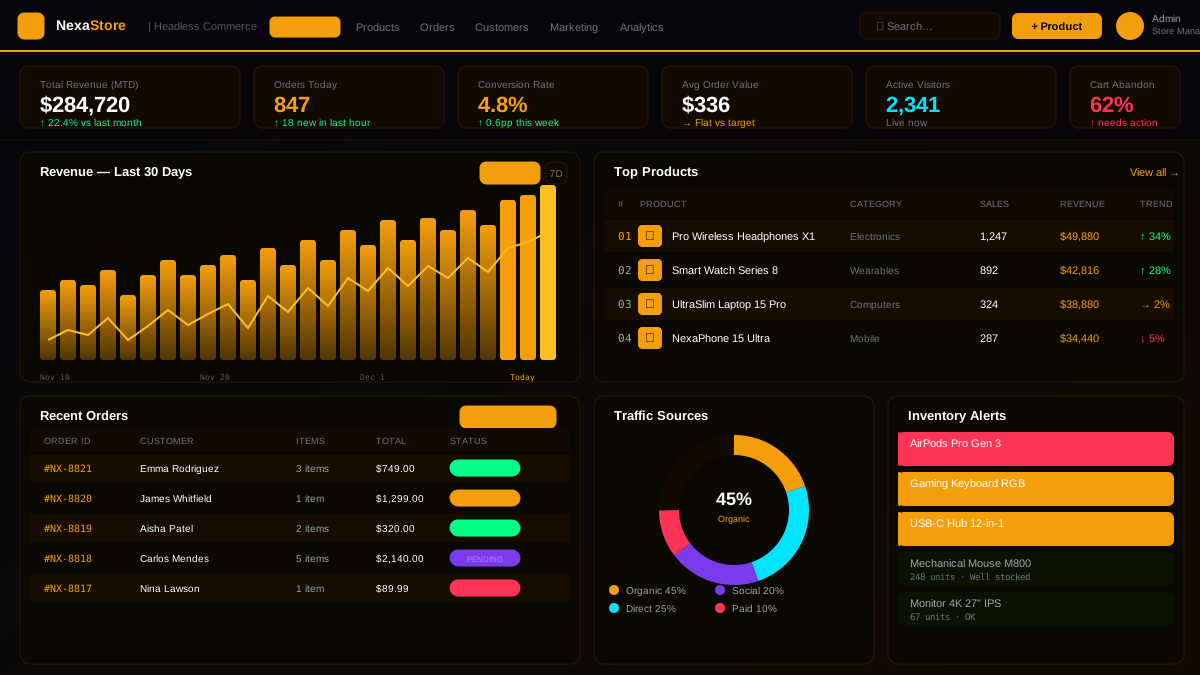
NexaStore — Headless E-Commerce Platform
A high-performance headless e-commerce platform handling 50,000 daily transactions with su...
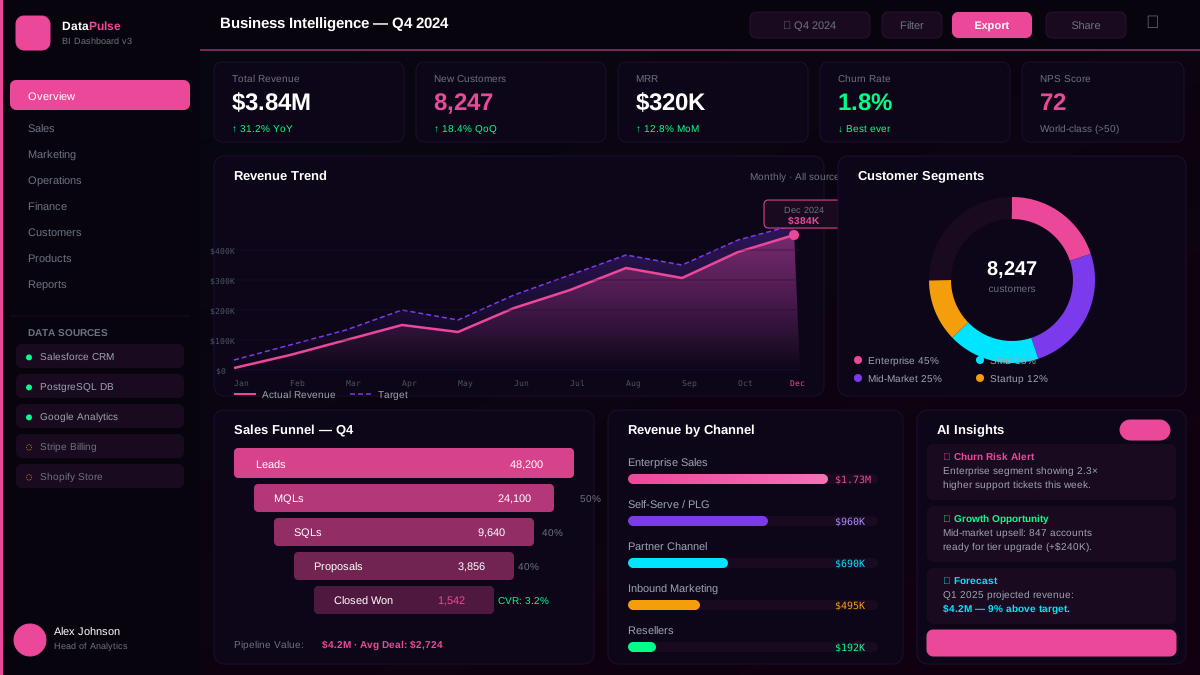
DataPulse — Business Intelligence Dashboard
A natural-language BI dashboard that lets non-technical executives query company data in p...
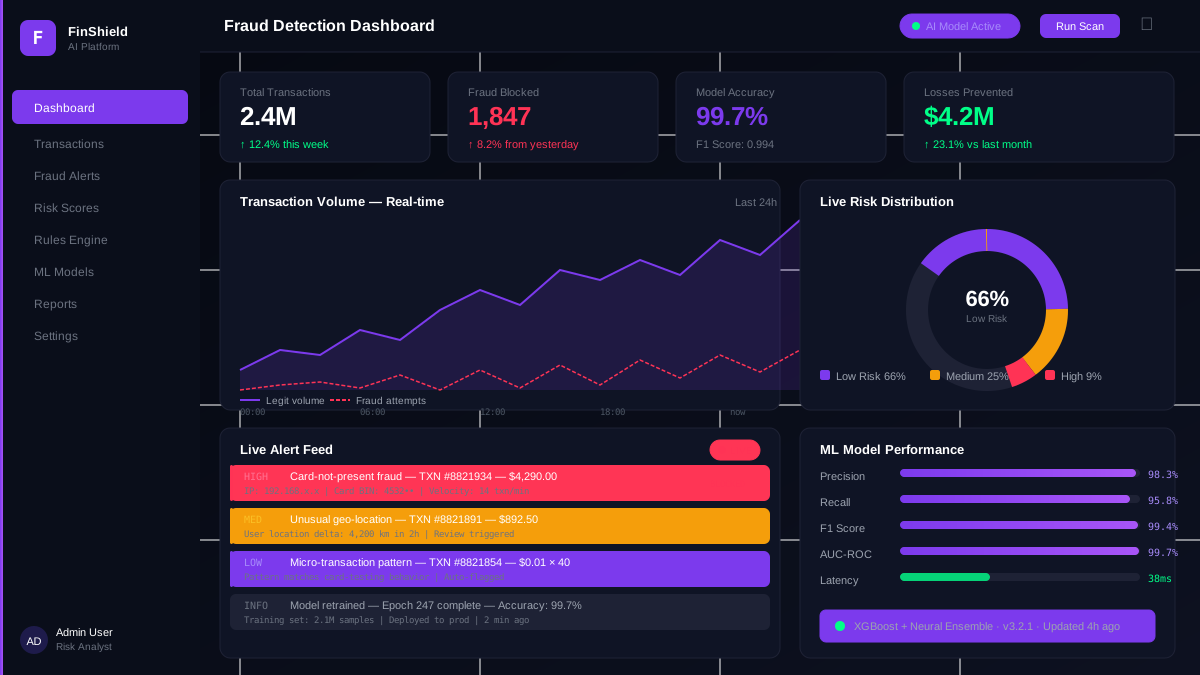
FinShield AI — Real-Time Fraud Detection Platform
A GPT-4 powered fraud intelligence system that cut false positives by 87% and processes 2....
From the Blog
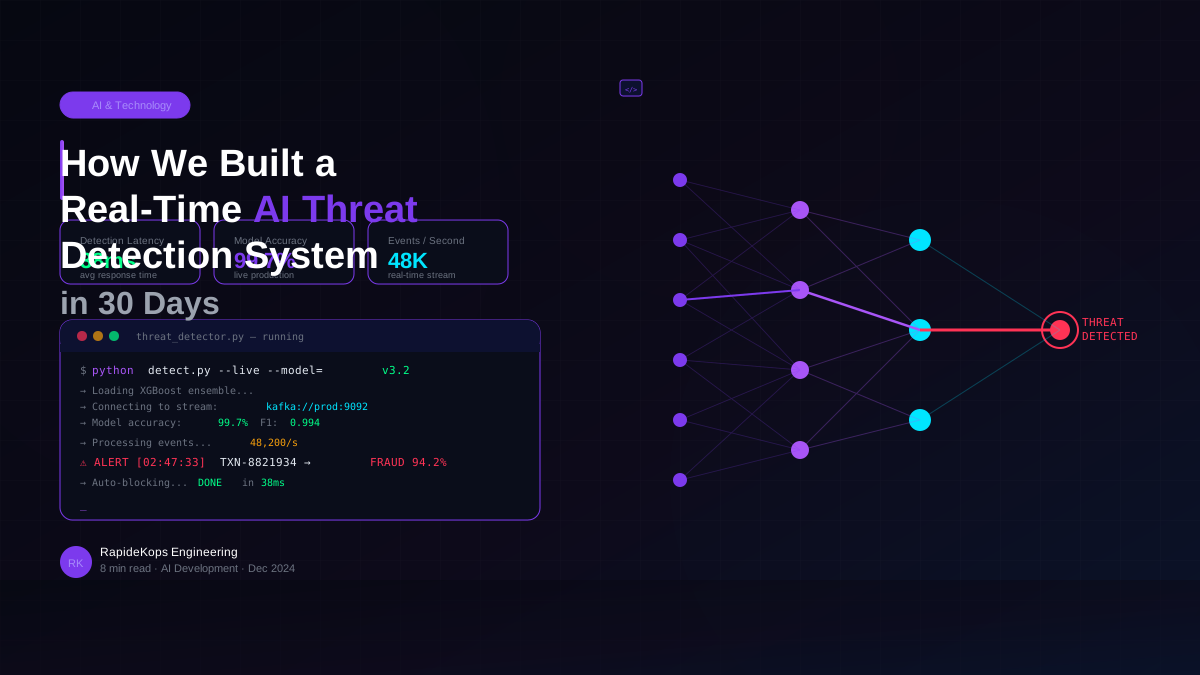
How We Built a Real-Time AI Threat Detection System in 30 Days
A behind-the-scenes look at how our team architected and shipped a GPT-4 powered threat intelligence...
Read Article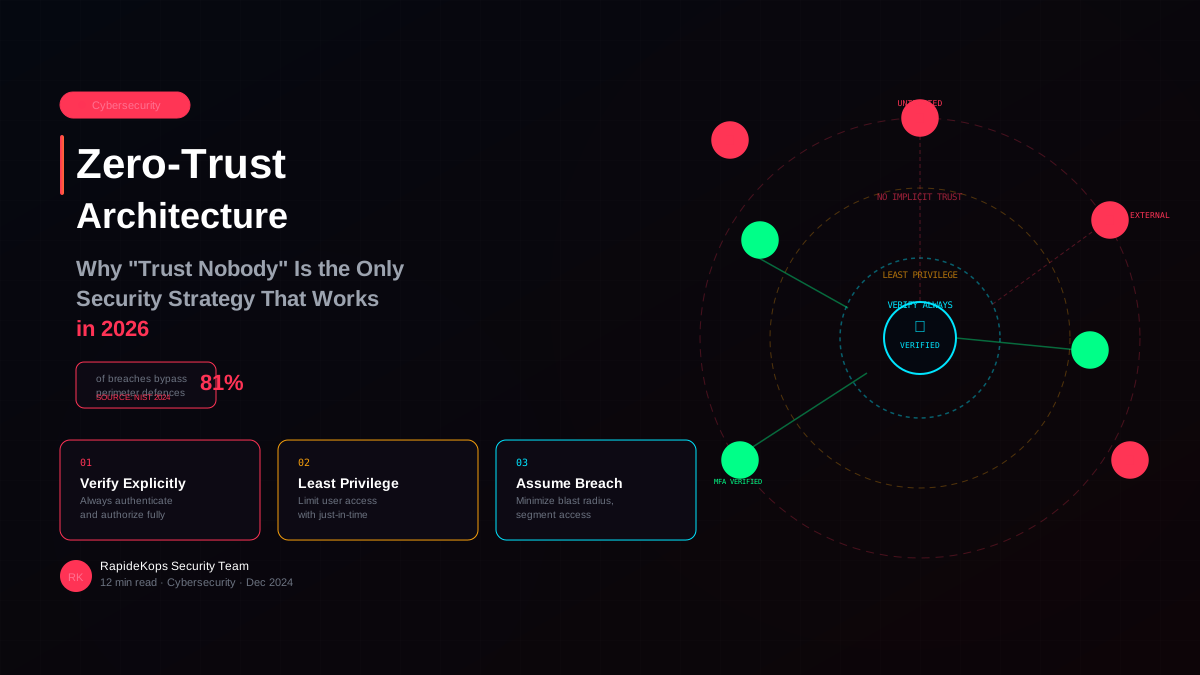
Zero-Trust Architecture: Why Trust Nobody Is the Only Security Strategy That Works in 2026
Perimeter security is dead. Here is a practical guide to implementing zero-trust architecture — the...
Read Article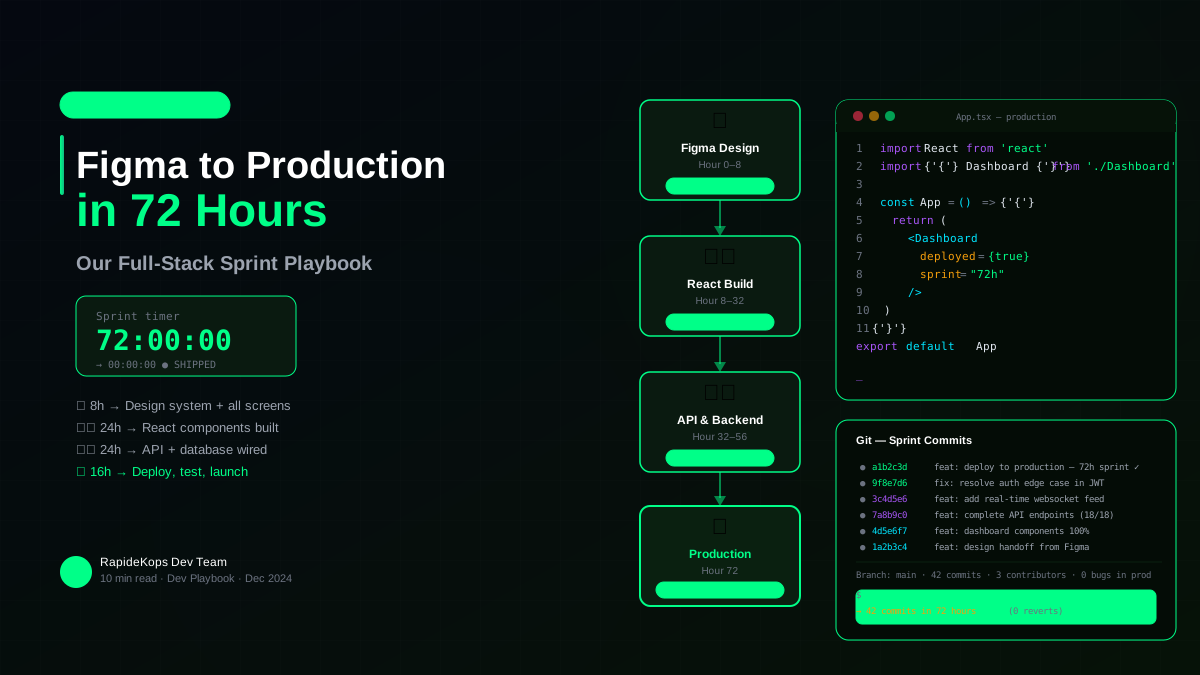
From Figma to Production in 72 Hours: Our Full-Stack Sprint Playbook
Speed without chaos. Here is the exact playbook we use to take a client from approved designs to a l...
Read ArticleReady to Escape Your Legacy System Without the Big-Bang Risk?
We will audit your existing system, design a safe incremental migration path, and move you to modern infrastructure — without disrupting your business.